A little boy’s dream… takes him so far – Miles away from home. He follows the heart, He follows his art.
He spends hours… in solitude.. Practicing the piano. So that we could Listen to the divine sounds Of Mozart and Chopin.
Beautiful in appearance, Sensitive emotionally, He strikes us with originality Of his artistic performance.
His fingers play While his face talks to Invisible friends of Beethoven, The dancing fairies of Sibelius, And the characters of the suite of Prokofiev.
He smiles and laughs with them, He cries and prays for them, He dreams their dreams And shares visions of them with his audience.
May God bless you, oh, pianist! With the gifts you deserve And with those you don’t. May your soul fulfill The mission it came To accomplish In this beautiful world.
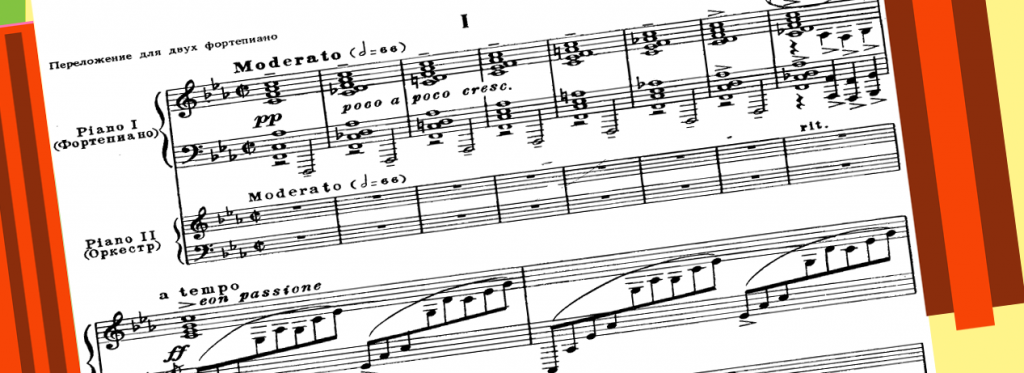
Composed between Fall of 1900 and April of 1901, Concerto #2 was premiered on November 9th, 1901 by Rachmaninoff (OBM) as a pianist and Alexander Siloti (OBM), his cousin, as a conductor. Not everyone knows that this concerto was dedicated to Nikolai Dahl (OBM), the physician who was a tremendous help to Rachmaninoff in helping him restore self-confidence after a prolonged depression caused by excess criticism of his First Symphony paired up with problems in personal life. After the first and last movement premiered in December 1900 with Rachmaninoff as the soloist, the entire piece was first performed in 1901 and was enthusiastically received. This concerto earned the composer a Glinka Award, the first of five awarded to him throughout his life, and a 500-rouble prize in 1904.
We hope our readers and listeners will find their favorite interpretation of this magnificent work of art below and share their impressions with us in the comments.
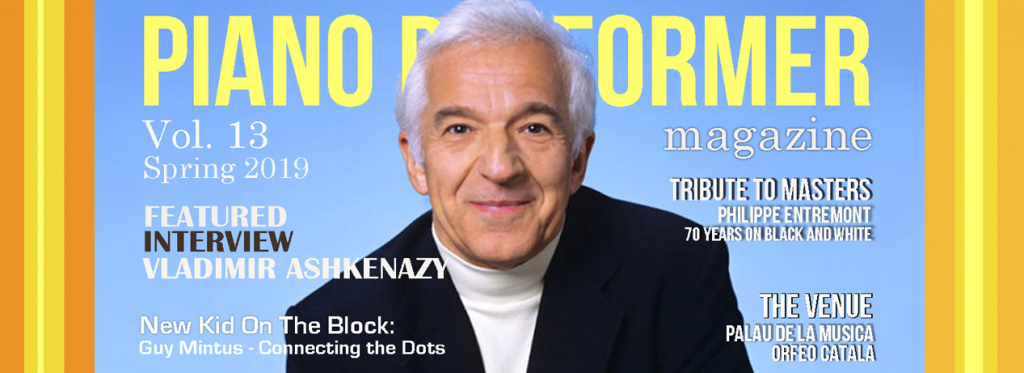
Sometimes they say that new is nothing but well-forgotten old. And it is exactly the case with the material of this interview. Conducted by Roy Plomley (OBM) at BBC in 1978 – over forty years ago – this piece transports us back in time and gives us an opportunity to see the Vladimir Ashkenazy way back when while knowing who he had become today.
Interviewer: You were born in Russia in the town of Gorky. That wasn’t the original name of the town, was it? Vladimir Ashkenazi: No. The original name was Nizhnii Novgorod.
I: And it was renamed after the writer. VA: Correct.
I: You moved to Moscow when you were very little. VA: Yes, when I was three, I think.
I: ….and there was a lot of music in your home? VA: My father is a pianist and there was some music in our home. Not very much and it wasn’t classical it was popular.
I: And your mother? Is she musical? VA: No. My mother is not, but she was the one who noticed that I was rather interested in music. We didn’t have an instrument. Only when I was six. I remember my mother asked me whether I would like to start studying playing an instrument. And I said yes, and she asked me what instrument. I said piano, because my father was a pianist. So, that’s how it started.
I remember my mother asked me whether I would like to start studying playing an instrument. And I said yes, and she asked me what instrument. I said piano, because my father was a pianist. So, that’s how it started.
I: Music teaching in Russia is rather more intensive than in other countries. VA: Yes, the system is such that gifted
children are easily channeled to good music schools. It’s a very good system in that respect.
I: You went on to the the Moscow Conservatory.
VA: That’s right. I: You began taking part in a lot of competitions. Was this a standard part of the Russian musical education? At 18, you won the Second prize in the Chopin competition.
VA: It’s not a standard part of the education. It’s the most desirable path for a young musician to be a winner of an international competition. And the system is somehow geared to that – that unless you win a competition you have no chance of being on a concert platform. And I was simply a cog in the wheels, you know. And I went to those competitions because I was sent to them.
I was simply a cog in the wheels, you know. And I went to those competitions because I was sent to them.
I: There’s one that you won in Belgium. A competition, which sounds terribly grueling – Queen Elizabeth Prize. VA: Yes, it is a very difficult one. The range of repertoire is enormous, and you have to learn a new piece in The Final Round. A new unknown piece written especially for the competition in eight days and played with the orchestra. So, that’s difficult.
I: Are you a quick study? Can you memorize easily? VA: Yes I’m rather quick. Fortunately that’s a gift from nature. I: You had some very distinguished judges in that competition. VA: Yes, we had Rubinstein (OBM), Casadesus (OBM) and Gillels (OBM).
I: And that earned you a tour of the United States. VA: Um, I suppose so. Yes, I suppose that was the most important element.
I:Of course, you still haven’t graduated you had to go back to the Conservatoire. I think it was in your final year that you met an Icelandic student.
VA: No, we met in 1958 when she came to participate in the first Tchaikovsky Competition, in which I did not participate. Then she came back in 1960 to study in the Conservatory with the same piano teacher as I was studying – Mr. Lev Uborin (OBM), and that’s when we met a lot. And we got married in 1961. And I graduated from the conservatory actually at the end of 1960.
I: Now your career was getting worked very well underway. You were a married man, and you took part yourself in the Second International Chaikovsky competition. VA: That’s right.
I: And you won it. VA:Yes, it was against my will I never wanted to participate. The authorities simply told me of couple of times on a very high level that unless you participate you might as well forget about your career.
I: The Russians wanted a Russian to win it. Was that the idea? VA: They needed a very strong team and they needed a leader. So, they were trying to gather the strongest they had at that moment, and I belonged to that category at that moment. And I married a foreigner, which is already an anathema in Russia, you see. And they banked on it. They said, well, you know what’s happening with you. And if you don’t participate, you can count your international career finished. So, what can you do?
I: Right. Well you entered, and you won. In fact, you tied for the first prize with an Englishman John Ogden (MGBH). VA: Yes. Well, for practical purposes, there’s no difference whether I tied or not. The most important part was that I was also a winner. And for practical reasons it was enough. Having won the first prize I was in the position to count on international tours although I was married to a foreigner. You see, there are degrees in life in Russia where you know that this helps you and this doesn’t. And if even if you have some negative circumstances you know, which kind of a positive circumstance might tip the balance in your favor. And that was it, you see.
Having won the first prize I was in the position to count on international tours although I was married to a foreigner.
I: So, it did lead to a lot more overseas engagements. Now, there was a complication. Your wife Thorunn (MGBH) didn’t enjoy living in Russia. VA: No. It’s not surprising. It’s difficult to adapt yourself to those circumstances.
I: Icelandic, he had been brought up in England. VA: Yes, that’s true. Basically in England she’s very much Icelandic, of course. Well, it was hard to to to live in Russia. It’s hard for Russians to live in Russian. It’s infinitely harder for foreigners to try to live there. But the problems aren’t just the lack of the usual freedoms which would take for granted in the West. It’s not only that, but the problem with her was also that many Russians became suspicious that she wanted to actually live in Russia. They don’t expect that foreigners would like to live in Russia and would like to openly try to adapt themselves. It’s very strange and there isn’t enough time really to explain it. But when she, in fact, took up Soviet citizenship, which was also actually imposed on us, the people in the conservatory suddenly became unfriendly. Because when she was a visitor a foreigner, it was one thing. But when a foreigner tries to be one of those, that’s a different thing – they wouldn’t like to mix with her. And that upset her very much. She didn’t expect that.
I: So, you decided to live in the West. This of course wasn’t a political decision at all. It was simply an emotional one. VA: Yes, initially it was very very much emotional. But I was aware that any decision of this kind will have great political repercussions, because anything concerning the West with Russia has political undertones and overtones, and everything is politically colored. And, of course, I was right. It was taken very much politically in Russia. I: How much of the year do we spend traveling? VA: I think, seven or eight months.
I: It’s a long time to be away from home. You moved now your base to Reykjavik, to Iceland. That must be rather badly positioned for world travel. VA: Yes, it isn’t. It isn’t so well positioned and, in fact, we have now divided our time between Iceland and Switzerland. Switzerland is so centrally located. So, we’re sort of in-between.
I: You’ve done a great deal for musical life in Iceland. VA: Oh, I would like to evaluate what I’ve been trying to do in Iceland. I simply participated in the music of Iceland as much as I could. I tried to organize a festival, bring some fairly well-known and wonderful artists, most of whom actually are friends of mine, so it was rather easy for me to get them there. I played a few times and conducted the local orchestra. But I don’t attach too much value to what I’ve done. It’s only natural. I: You believe in the casual approach. I saw you playing a major concerto the other evening at the Festival Hall with 40 members of the London Symphony Orchestra sitting around in white tie and tails. You had a dinner jacket and a sweater. VA: It’s not exactly a sweater. Oh, you call it a sweater… It’s a white polo neck. Okay, fine, okay. I think one should play in something very simple, and ordinary, and comfortable. And what I wear I think is quite ordinary, quite simple, and it’s comfortable at the same time. I think tails should sort of go away soon. I think it’s almost like a masquerade. It doesn’t relate to music at all, I think. Well, those things hanging behind you and the bow tie. Sometimes they look like waiters. I think there is no point in that. I think we should really drop it one day.
I: When did you make your very first record? Before you left Russia?
VA: Yes, I recorded in Russia after the Chopin Competition and again before and after the Tchaikovsky Competition.
I: Have you any idea how many records you’ve made all together? It’s a very large number, isn’t it.
VA: Yes, and I didn’t know whether I should be proud of it. Because not everything is good in my recordings. Yes, it is something like 60 discs or something. For a pianist, it’s quite a lot.
I: You’ve recorded all the Beethoven, Rachmaninoff, Prokofiev concertos. You have some very ambitious recording projects that you’re working on which are going to keep you busy for a long time. You’ll get to do all the Chopin pieces. VA: Yes, and all the Beethoven sonatas and the Bartok Concertos. It’s a lot to do. Yes, I look forward to it.
I: And now, of course, conducting is quite a growing part in your career. You like conducting, don’t you? VA: Yes, I enjoy it very very much.
I:There’s a new recording of yours of Tchaikovsky 5th symphony, which you’ve conducted, which is I believe going very very well indeed. VA: That’s nice to hear. When I listen to it, I hear all the fault. It’s terrible. It’s a little easier with orchestral recordings, because although you conduct, you’re not really producing the sound yourself. And so when you enjoy certain passages in an orchestral recording, somebody else is doing that.
I:How many concerts do you play a year? Do you restrict yourself to a certain number? VA: I don’t usually plan in terms of how many contests I should play. I plan in terms of what repertoire I want to play and how many times I want to play a certain piece before I either record it or play it in London or in New York in very important places. And this brings me usually to over 100 concerts a year.
I don’t usually plan in terms of how many contests I should play. I plan in terms of what repertoire I want to play and how many times I want to play a certain piece before I either record it or play it in London or in New York in very important places.
I: That’s a lot. What proportion of those are with an orchestra as a pianist? VA: I think it’s really evenly divided. Roughly, I think it’s half the time.
I: How much does contemporary music interest you? VA: As information about what’s happening in music, it interests me a lot. As material for performing – not so much, because I don’t find many inspired works written for the piano. The piano is very often an old fashioned producer of sound, so to speak, for the further modern composers. They need video for new sources of sound electronic. And if it’s the piano, then it has to be broken to pieces and interfered with, you know, the most natural way. So, there isn’t so much I don’t think for the piano anymore.
I: You don’t fancy Ashkenazi and his electric piano. Does your wife still play the piano? VA: She can and she could, but she doesn’t.
I: She hasn’t pursued her career. VA: No, she decided to drop it entirely when we got married. And I think she was very wise, otherwise it would have been a very difficult marriage. Two concert artists sort of tend not to meet too often.
I: Yes, you have three children. VA: We, have no have for four. We’re expecting the fifth.
I: Is there any musical talent showing in the older ones? VA: They’re all musical, and I think they have certain gifts in music. But it’s hard to say how big and large gifts are. They still studying a little bit.
I: You’ll be playing septets one day. I: What would you take with you on a deserted island apart from the Bible and Shakespeare, which are already on the island? And we don’t allow multi volume encyclopedias. VA: ;I must confess. Honestly, I could not think of any other books that I would like to have if I already have the Bible and Shakespeare. Well, maybe I should have just a blank book and I could, perhaps, write something in it. Just for myself, for my own consumption, you know. No so arrogant as to think it could be of any value to others.
I: Thank you, VLADIMIR ASHKENAZY. VA: Oh it’s my pleasure. And I’m very grateful that you invited me. Thank you very much.
Dedicated to his love interest – a 17-year-old Austrian countess Julietta Guicciardi (OBM), who was also briefly one of his students, the first movement of Moonlight Sonata has travelled through time and been publicly performed by each subsequent’s centuries’ most prominent players.
Although Moonlight sonata was composed in the summer of 1801, it didn’t get its name until 1832, when music critic and poet Ludwig Rellstab (OBM) had this inspiration on a moon lit night on the banks of the Lucerna River. Some biographers make the connection between the unshared love the composer held for Giulietta Guicciardi and the sonorities of the first part. Even more so, this sonata was dedicated to Giulietta, the musical theme of the first part being borrowed from a German ballad. (1)
Below are the renditions of Moonlight Sonata by some of the most renowned pianists of today.
Which one speaks to your heart?
Asiya Korepanova (MGBH):
2. Valentina Lisitsa (MGBH):
3. Daniel Boarenboim (MGBH):
4. Georgii Cherkin (MGBH):
5. “Immortal Beloved” (MGBH):
5. Tiffany Poon (MGBH):
6. Anna Sutyagina (MGBH):
7. Vladimir Horowitz (MGBH):
8. Wilwelm Kempff (MGBH):
What is your favorite rendition on the famous Moonlight Sonata?
Please, leave your comments below and nominate your favorite pianist.
References:
(1) http://www.all-about-beethoven.com/moonsonata.html – Retrieved on June 15th, 2018
There are many great pianists worthy of writing about, worthy of bringing the stories of their music and talent to light, but the story of Alice Herz-Sommer (OBM), a pianist from Pre-war Czechoslovakia is special. The piano did not only play a prominent role in her life. It, literally, SAVED her life.
During the war, when Nazis came to power, Alice, along with her beloved husband Leopold (OBM) and son Rafi (OBM) were sent to a concentration camp. Theresienschtadt. That camp, however, was no ordinary camp. It was a model camp that the Nazis used to show the world of how well they treated their prisoners. The Jews that comprised the elite of society and were able to contribute to that “show-and-tell” were spared. Alice was among them. She and her fellow musicians were assigned to entertain the Nazis through playing music.
Alice Herz-Sommer as a little girl
Someone once said that leaders are not born, leaders emerge from the dire circumstances. Alice’s leadership emerged as she saw the ugly face of Evil. Intuitively, she realized that Evil couldn’t be fought with Evil, that Darkness could not be fought with Darkness. She decided to fight Darkness with Light. In her interviews she mentioned that she used to have a twin sister. Her twin sister was a born pessimist, and Alice was given a gift of being an optimist. In her life she chose to see only good, while acknowledging that bad still existed.
Against all socially promoted norms where children modeled their parents’ reactive behavior, Alice decided not to react. And that was the beginning of her victory. She remembered her mother’s teachings of being grateful for everything. Her motherly instincts also played an important role as she felt that as long as she was happy, nothing would emotionally scar her five-and-a-half-year-old son Rafi, who remained the only memory of her husband that had been transferred to Auschwitz shortly after the family been captured. Her plan worked. Her son avoided the trauma that so many ended up carrying with them through life. The most curious thing is that Alice did not just act happy for the sake of her son, she was truly happy. She chose happiness regardless of the circumstances, which is one of the main concepts of Jewish faith. Although she grew up without a religion in a family of intellectual humanists (her parents were friends with Kafka (OBM), Sigmund Freud (OBM), and many other prominent figures of that time), the generational genetic memory of her ancestors practicing Judaism in a proper way somehow seeped into her DNA, while skipping her sister’s.
Alice Herz-Sommer with her son Rafi
Alice played piano along with other musicians, and this was her escape. To her, music was food – the manna from heaven. And with that food she fed her child as well.
After being liberated from the camps, Alice moved to Israel where, ideologically, she felt at home. She raised her son and partially restored her piano career. Although she became a successful teacher, given the circumstances of being a dedicated single mother, she was unable to pursue a full-blown career of a pianist as she did before the war. Life was good to Alice. Her attitude in adherence to the Light put her in a mental state that so many wish to achieve – a state of perpetual gratitude. Gratitude for every little and big thing that came her way. “Life is a present,” she would often say to her late friends. “Everything in life is a present.”
Later in life, she followed her son to London. But the hopes of growing old next to him did not realize. Her son Rafi, then in his sixties, right after his stage performance in Israel (he became a successful musician as well) told his friends he didn’t feel well and they rushed to the hospital. He was diagnosed with iliac aneurysm, and was given anesthesia prior to the operation. “He never woke up,” Alice recounted. He went into a surgery with hope and faith. He died without fear or suffering. And this is what his mother, the brave Alice, chose to concentrate on after she received the news of his unexpected death. She grieved with a positive attitude. In her interviews she mentioned that she was happy he did not have to experience all the troubles of old age and that he passed in a peaceful way without suffering.
Leopold Sommer, Alice’s beloved husband.
So, she stayed in London, next to her daughter-in-law and her grandsons. At the age of 108, she lived by herself, without a home attendant. She still gave interviews, welcomed guests daily in her small apartment, and …. as part of her daily routine played the piano. For several hours a day. She used to say that she was a Jew without a religion, and that music had become her religion. In the musical sense, she was an ultra-religious Jew.
Alice passed away at the age of 110. She became an inspiration to many. Another fellow pianist, Caroline Stoessinger, wrote a book “A Century of Wisdom: Lessons from the Life of Alice Herz-Sommer, the World’s Oldest Living Holocaust Survivor.” In 2013, Malcolm Clarke directed, wrote, and produced an Academy Award-winning documentary titled “The Lady in Number 6: Music Saved My Life,“which reached over 1.3 million views on YouTube. Tony Robbins, a world famous motivational guru, interviewed Alice in her apartment and was amazed when she said that being in a concentration camp was a gift in some ways. “HOW?!” he exclaimed in disbelief. “I look where it’s good. I know that there is bad, but I look at the good thing,” she answered, with her smile turning into laughter. “I was always laughing. I was with my son lying on the floor, and I was laughing. How can a child not laugh, if the mother laughs?!”
There is something special about Holocaust survivors. Once faced with intense Darkness, one finds a strong desire to cleave to Light. And that feeling stays deep inside forever. One of our synagogue members, Henry (MFBH), is in his 90s and is by far the most cheerful person I’ve ever met. At his age, takes dance lessons, travels the world, and even has a girlfriend. Once he gave me his card, which stated his first name, last name, and his title – LOVER OF LIFE. Now, this is special. But this is the story for another time. And for a different magazine.
Enjoyed the interview? Please, consider donating a small amount to the author to express your appreciation.
 Piano Performer Magazine