Built relatively recently, the Walt Disney Concert Hall downtown Los Angeles, CA opened its doors on September 24th, 2003. It catches the eye not only with its sail-like exterior, but also with the beautiful and breezy interior. It’s no surprise as the hall was designed by the two very talented men – the architect Frank Gehry (MGBH) and a master acoustician Matsuhiso Toyota (MGBH). It seats 2,265 people and serves, among other purposes, as the home of the Los Angeles Philharmonic orchestra and the Los Angeles Master Chorale. The walls and ceiling of the hall are finished with Douglas-fir and Alaskan yellow cedar while the floor is finished with oak. The round auditorium features a sailing ship motif that the architect Frank Gehry likens to Noah’s Ark. Columbia Showcase & Cabinet Co. Inc., based in Sun Valley, CA, produced all of the ceiling panels, wall panels, and architectural woodwork for the main auditorium and lobbies. (1) The Hall’s reverberation time is approximately 2.2 seconds unoccupied and 2.0 seconds occupied. (3).
The Library of Congress/Ira Gershwin Gallery, housed inside Walt Disney Concert Hall, was designed by Hodgetts and Fung Design Associates and made possible by a generous gift from the Ira and Leonore Gershwin Trust for the Benefit of the Library of Congress. The gallery is situated on the second floor of Walt Disney Concert Hall and rotates its collection bi-annually. (3)
With the initial donation of $50 million made by the widow of Walt Disney, Lilian Disney, in 1987, the County of Los Angeles added $110 million and sold bonds in order to build the garage. The Disney family later added $34.5 million with another $25 million from the Walt Disney Company.
Disney Hall consists of the Main Performance Hall and two smaller performance spaces.
Walt Disney Main Performance Hall
BP Hall is an intimate space with chairs, wood floors, walls, and ceilings that hosts pre-concert talks, musical performances, receptions, and private events for up to 500 guests.
BP Hall at Walt Disney Performance Hall
The Walt Disney Concert Hall Founders Room features a signature Frank Gehry sculptured plaster ceiling which rises 50 feet to reveal a skylight. This 4,800-sq. ft. dining room includes custom lighting, millwork, private dining patio with travertine stone, and landscaping of the exterior patio area. The exclusive Founders room hosts pre- and post-concert parties for major donors.
Walt Disney Hall Founder’s Room
A REDCAT Theater performance space holds avant-garde and experimental music, dance, theater, movies, and art.
Walt Disney Hall Map
Since its opening, such pianists as Lang Lang (MGBH), Pierre-Laurent Aimard (MGBH), Daniil Trifonov (MGBH), Armen Guzelimian (MGBH), Keith Jarrett (MGBH), Helene Grimaud (MGBH), Benjamin Grosvenor (MGBH), Garrick Ohlsson (MGBH), Alessio Bax (MGBH), Murray Perahia (MGBH), George Li (MGBH), Krystal Zimerman (MGBH), Scott, Dunn (MGBH), Alpin Hong (MGBH), Emanuel Ax (MGBH), Eduardo Delgado (MGBH), and Yundi (MGBH) graced the stage of the main hall with their performances.
Frank Gehry’s Sketch of Disney Hall
In an interview with Deborah Borda (MGBH), Frank Gehry shares his experience of working on Disney Hall.
DB: It’s fair to say that the Walt Disney Concert Hall has changed the way how a concert hall should involve people. When I first saw the design, I was absolutely blown away hoping to be a part of it. When you worked on it, did you design the hall inside out of from the outside in?” FG: Inside out. When people look at the buildings I designed, they assume I designed from the outside in. That I make a form and jam stuff in. And I think a lot of my colleagues do that, maybe. But I don’t.
DB: What’s the one thing that stands out in your memory the most about the opening concert? FG: I can’t help to remember taking the bow with Esa-Pekka […Salonen, the Music Director of Los Angeles Philharmonic] and the confetti and all that stuff. I never experienced that before. Architects don’t do that very often.
DB: But you must have also had a special pride. We had designed those programs together. You were the artist. That’s why you were up on a stage. I don’t know if people know, but you are one of the most regular concert attenders I know. What do you think now looking back ten years later, is the most successful aspect of the hall? From your point of view. FG: Well, I think the clarity of the sound has got to be number one. And the relationship between audience and performer is right up there. It’s subtle. So when the orchestra is full on, they feel a receptive audience, because the audience can hear them. They feel it. It’s like a theater. You feel how you are coming across. And when the orchestra hears that, it makes them play better, believe it or not. I think.
Disney Hall Pipe Organ, “The French Fries”
Inside the main concert hall we can see a beautifully designed 6,134-pipe organ, sometimes referred to as “French Fries.” Composer Terry Reily called it “Hurricane Mama.”
The organ was built by the German organ builder Caspar Glatter-Götz (MGBH) under the tonal direction and voicing of Manuel Rosales. It cost $ 3 million to build, which was a gift to the County of Los Angeles from Toyota Motor Sales, U.S.A., Inc. How many instruments have a building attached to them? The building not only didn’t exist, its design kept changing. “There were many hurdles that had to be overcome. And they were civic hurdles and architectural hurdles,” Deborah Borda (MGBH), the President and CEO of LA Philharmonics. “We studied all organs that we could find in history and did a thorough analysis of what they looked like,” said Frank Gehry. “And it seemed like there were a lot of variations possible.” Mr. Gehry went back and worth with Manuel Rosales on the shape of the tubes. “I was told to walk off this project. This would ruin my career. This was insane. The organ would be a complete disaster. Nobody would pay any attention to it. It took two and a half years to reach this design and well over forty different models.[…] The organ went through many hoops to please the artistic sense of Frank Gehry. I had to make sure that whatever he designs, works ultimately as a musical instrument,” shares Manuel Rosales in an interview. “Because in the room like this, you don’t put sculpture, it’s focusing on the music, so we thought there was a rationale for the organ to have some spunk,” shared Frank Gehry in his conversation with Deborah Borda.
The concert hall houses celebrity chef Joachim Splichal’s (MGBH) landmark fine dining restaurant Patina designed by Belzberg Architects. Open for dinner and late-night supper, French-born and trained executive chef Tony Esnault’s exquisite dishes are made from the best ingredients available from local and regional farmers, ranchers and fishermen. Chef Esnault also offers a special tasting menu at the private Chef’s Table for nine, which offers guests an unobstructed, behind-the-scenes view into kitchen dynamics.
Accommodating 240 seated guests, including a private dining room for up to thirty, Patina welcomes guests into a warm, inviting interior undulating with organic ceiling curves and ripples of carved walnut walls. Patina also features an impressive bar display where guests can unwind before dinner or enjoy a late-night cocktail on the patio. (4)
Walt Disney Hall Community Garden, the Famous “Rose for Lily” Frank Gehry Fountain
On the third level of the building, visitors will find the community garden that features outdoors performance space and beautiful Southern California landscaping. The community garden is open for public and can be a cozy refuse from the loud noises of the busy city life. In the middle of the garden is a beautifully carved fountain in the shape of a rose, subsequently named, “A Rose for Lily” in honor of the main donor for the Disney Hall – Lilian Disney.
A concert hall, an educational space, a park, an office, and a cultural landmark – all rolled into one. Walt Disney Hall represents the best of the city of Los Angeles and the performing arts, an LA’s Phil is proud to call it home. (5)
REFERENCES:
(1) http://www.woodworkingnetwork.com/articles/columbia_showcase__cabinet_co_inc_-_an_acoustical_journey_127691448.html#sthash.S9HM2Erb.dpbs – retrieved March 16th, 2017
(2) http://www.nagata.co.jp/e_sakuhin/factsheets/wdch.pdf – retrieved March 16th, 2017
(3) https://www.musiccenter.org/about/OUR-VENUES/Our-Theatres–Concert-Halls/ – retrieved March 16th, 2017
(4) http://www.laphil.com/visit/patina-walt-disney-concert-hall – retrieved March 16th, 2017
(5) https://www.youtube.com/watch?v=pAEd1uDOZJE – timing 7:00 – retrieved March 16th, 2017
Enjoyed the interview? Please, consider donating a small amount to the author to express your appreciation.
Since its opening night, blessed by performance of Peter Ilyich Chaikovsky (OBM), Carnegie Hall in Manhattan, New York has been one, if not the most, of the world’s prestigious classical performance venues. Such pianists as Vladimir Horowitz (OBM), Sergei Rachmaninoff (OBM), and Arthur Rubinstein (OBM) played an important part in contributing to the grandeur of this place. Many books have been written about the famous Carnegie Hall and events that happened there over the years. In this article, we would like to review the history of this amazing venue, give tribute to its founder, and reveal a few secrets.
And here [are] 2,700 odd people who had been sitting for an hour…waiting. And suddenly the house lights go out and the stage lights go on and PHYSICALLY, backstage, it felt like putting one’s hand in an electric socket. And I brought him downstairs and to the edge of the stage and he turned around and faced me. [He] said “I’m looking at you,” and I thought ‘what do I do now? … Oh! Ok!’ So I turned him around and put my hand in the lower part of his back and pushed him out onto the stage. Well… the wave, the sheer sound wave of all those people getting up and greeting him was physical. You really were just physically hit by it… and then he gestured to the piano and started to sit down, and the silence was just as loud as the applause had been a moment ago. – Schuyler Chapin (MDBH), The Art of Piano: Great Pianists of the 20th Century [1]
Such is the story of Vladimir Horowitz’ legendary return to the concert stage on May 9, 1965, after a 12 year sabbatical from public performance [2]. It is no surprise that this epic re-launch took place at Carnegie Hall, the most prestigious stage in the world. Few concert halls have lived up to the legacy and mystique of Carnegie Hall, a legacy built by the international stature of the great artists to perform there since its inception.
Vladimir Horowitz’ historic recital
[…] in the 1890’s, New York City’s midtown was centered around 14th to 20th streets – Carnegie Hall (established in 1891 as “The Music Hall”) sat between suburbs and farmland.
Today the neighborhood surrounding Carnegie Hall is one of Manhattan’s most exclusive. But in the 1890’s, New York City’s midtown was centered around 14th to 20th streets – Carnegie Hall (established in 1891 as “The Music Hall”) sat between suburbs and farmland [3]. And while the hall has been named after Andrew Carnegie (OBM) since 1893 [4], it may be more appropriate to refer to it as Mrs. Carnegie’s (OBM) hall. It’s believed that Carnegie, then a newlywed, built the music hall as a wedding gift to his wife, Louise Whitfeld Carnegie, says Gino Francesconi (MGBH), director of Carnegie Hall archives. [5]
Carnegie Hall, 1895
Carnegie Hall opened with a five day music festival featuring composer Pyotr Illyich Tchaikovsky (OBM) conducting several of his works including the first Piano Concerto. Carnegie Hall has seen thousands of performances throughout its history including notable premieres such as Antonín Dvořák’s (OBM) Symphony No. 9 (“From the New World) (1893), Gustav Mahler’s (OBM) Symphony No. 2 (“Resurrection”) (1908) and George Gershwin’s (OBM) Concerto in F (1925). The hall has also been no stranger to popular music since 1938, when Benny Goodman (OBM) and his Orchestra made their debut. The Beatles also famously performed two concerts at Carnegie Hall in 1964. [6]
William Tuthill (OBM) was the chief architect of the hall, and his design decisions reflect the tastes of the day. The building is in the Italian Renaissance revival style with simple masonry arches integral to stability (before the days of structural steel), but also features an Edwardian sensibility with its gold leaf patterns and red velvet upholstery on the seats. Sadly, these aesthetics lost their charm decades later. And in the mid-1950’s when the hall was looking for new ownership, it was slated for demolition. Carnegie Hall had been offered for sale to the New York Philharmonic, but the symphony already had plans to relocate to Lincoln Center, which was being constructed nearby. Under pressure, a group led by violinist Isaac Stern (OBM) famously saved Carnegie Hall from the wrecking ball. [7]
Beauty shots of Stern Auditorium/Perelman Stage
When most people talk about Carnegie Hall, they are usually referring to the Stern (OBM) Auditorium dedicated in honor of the great violinist in 1997 (2,804 seats) [8]. The accompanying recital spaces, Zankel (OBM) Recital Hall (599 seats) and Weill (OBM) Recital Hall (268 seats) are no less elegant. Zankel Recital Hall opened in 2003, after being converted from being a cinema and features cutting edge design that can be reconfigured to several different arrangements [9].
Weill Recital Hall, the smallest of the three halls, is where several emerging concert artists make important debuts to the international music community and has been in use continuously since 1891 [10].
Carnegie Hall, Weill Recital Hall
Unless you’ve gotten a bird’s eye view of Carnegie Hall, you probably didn’t know about the new rooftop garden terrace. It was added during the recent Studio Towers Renovation Project along with the Resnick Education Wing, all of which opened in the fall of 2014. The remodel provides space to host receptions before and after concerts as well as foster the developing talents of New York City music students. [11]
The Carnegie Hall Rooftop Garden
Acoustically speaking, Carnegie Hall’s Stern Auditorium is well known for it’s seemingly miraculous properties, but after a renovation in 1986, concert-goers swore that the sound was a bit off.
Acoustically speaking, Carnegie Hall’s Stern Auditorium is well known for it’s seemingly miraculous properties, but after a renovation in 1986, concert-goers swore that the sound was a bit off. And they were right! The culprit? A slab of concrete found underneath the stage nearly a decade later. “They opened the stage floor, found the cement, took it away and the sound came back,” said Francesconi. [12] Having seen a number of performances there myself, I can attest to the hall’s unique ability to accommodate performances of all types. Perfect for an entire symphony orchestra, the hall is equally suited for an intimate solo recital or chamber music setting.
[…] after a renovation in 1986, concert-goers swore that the sound was a bit off. And they were right! The culprit? A slab of concrete found underneath the stage nearly a decade later.
Looking back, it seems inconceivable to think that Carnegie Hall was ever at risk of being lost forever, but thanks to its designation as a National Historic Landmark in 1964 and New York City Landmark in 1967, this fabled venue will continue to present some of the world’s greatest musicians for generations to come. [13]
References:
[1] Sturrock, Donald (1999). The Art of Piano: Great Pianists of the 20th Century (Documentary). Quote by Schulyer Chapin dictated by the author. Start at 26 minutes and 13 seconds. https://youtu.be/vpiMAaPTze8?t=26m13s
Michael Refvem enjoys a multifaceted career as recitalist, chamber musician and concerto soloist. He recently moved to Montréal, where he enjoys walks in the old town and Mount Royal in his spare time.
I was introduced to the talent of Jarrod Radnich (MGBH) by one of my friends’ children who came over to me and, with intriguing excitement in his eyes, asked, “Would you like to see something cool?” He opened his laptop and showed me a video of Jarrod Radnich’s arrangement performance of “The Pirates of the Caribbeans” theme. As Jarrod was playing, I watched the 12-year-old boy’s eyes filled with amazement and awe. At the end of the performance, the boy exclaimed, “Did you see that!?” I must admit: that 12-year-old boy passed his excitement to me, and once I had a minute to sit down quietly at my desk, I watched all Jarrod’s YouTube videos…. more than once. To me, this 34-year-old Southern Californian embodied an epitome of a true performer who not only engages the audio senses of a listener, but also brings so much more in delivering a rich multi-sensory experience of piano performance for a diverse audience. A creative talent not so common in the piano world. All that inspired me to reach out to Jarrod Radnich for an interview.
Piano Performer Magazine (PPM): Please, tell our readers a little bit about yourself. Where and how did you grow up? Jarrod Radnich (JR): I grew-up in the artistic and eclectic desert town of Joshua Tree in Southern California, just north of Palm Springs. My backyard was literally the Joshua Tree National Park (it was designated as a national monument at the time), and the town’s total population was less than 3,000, with quite an expanse between neighbors and, even more so, other young people my age. My parents used to live on the beach. When they decided to start a family, they wanted to move out of the city. They weren’t kidding either. We were so far out that we couldn’t even get cable TV… so I’d rock climb, write music, practice, and have a lot of time to myself.
I was playing with Legos when my mom came in my room and asked if I wanted to start learning the piano. I glanced up, said, “sure,” and went back to building my Lego masterpiece…
PPM: How did you decide to become a pianist? JR: Actually, although most people find this difficult to believe, there was never a time where I decided I wanted to become a pianist. Instead, my early passion for composing was the driving force in my decision to be a professional musician, and the pianist part just came naturally with that. Inherently, I have great angst when I compose, for I “hear” so much more than what can be created on the piano as it exists now or any other singular instruments for that matter. Having said that, the piano is truly unique and unparalleled. At its core, it’s inherently a percussion instrument — rhythmic and innately primal; but it can also be hauntingly lyrical, creating melodies woven into beautifully rich harmonic textures. My introduction to the piano came as a result of my astute first grade teacher, Debbie Bernardini (MGBH). Being concerned because I was getting all of my homework done before the school day was over, she suggested to my parents that I needed something to challenge me. She recommended that I take piano lessons. The next day I was playing with Legos when my mom came in my room and asked if I wanted to start learning the piano. I glanced up, said, “sure,” and went back to building my Lego masterpiece… and that’s how it all began.
PPM: What did your parents do for living and how did their choice of occupation influence you? JR: While an avid surfer in his recreational time, my father is inherently an artist and became a highly sought-after general contractor and creative tile specialist, co-writing the California licensing tests for both tile and wrought iron installation. He now designs and builds incredible custom hot rods. Back when I was growing up, my mother worked with my father in their construction business and also as the executive director of the local chapter of the American Red Cross. I believe it was these environments where I learned the value of an intense work ethic and learned the importance of volunteerism, which is how I spend a significant portion of my time. I also was exposed to creative thinking and artistic expression.
PPM: Do you have any siblings? JR: I’m the youngest of two brothers, although it’s funny that most people don’t realize we are brothers — with virtually no visual resemblance and our temperaments are quite different. My paternal grandfather was one of the founders of the Bonneville Raceway (salt flats), and my brother definitely got the Radnich car gene — he’s the fleet maintenance manager for a substantial fleet of heavy-duty vehicles for a major telecom construction firm. He’s also creative, hard working, and appreciative of our upbringing. I, too, enjoy fast and exotic cars, and am thrilled to have recently added the new Lamborghini Huracan to my garage!
PPM: Do you have a family of your own? Children? What are your views on importance of a family? JR: I’m engaged to a spectacular woman and thrilled about it. Right now my only “kids” are two furry 115 lb playful Malamute mixes who believe that they are lapdogs. I believe family is a state of mind — blood is important, but ethics and character matter most.
PPM: In one of your interviews I read that you became a piano teacher at….. 11? How did that happen and who was your first student? JR: I had already been performing for several years, accompanying school plays and the like, and parents would ask if I would teach their children, many who were in my elementary school. Within two years, I had a regular weekly roster of over 30 students, from youth to adults, and was ironically getting paid more money than my school music teachers. But it wasn’t the money that was important to me. There is an excitement in being able to help someone else realize their musical goals — and even surpass them. Teaching is such an honor and a responsibility, and I am appreciative of having been given the gift of being a great teacher myself — and when the passion is real, it naturally spreads and you pass along that gift.
I’m honestly an introvert, but enjoy hamming it up on stage and keeping the interest of the audience.
PPM: When and under what circumstances did you have your first public performance? How did you feel before and after? JR: Ironically, my first public performance was as an “actor” in the first grade production of PETER PAN. I was Michael, and, it’s painful to admit it, but I caused a scare with my first grade teacher because I apparently acted so authentically, that she thought I was asleep on stage. I’m honestly an introvert, but enjoy hamming it up on stage and keeping the interest of the audience. I don’t actually recall my first piano performance, but it was probably in elementary school accompanying a play performance. Those were always fun because, as is typical of a boy at that age, I got to get out of my regular class to work on the play.
PPM: Where was the “Game of Thrones” video filmed? JR: That video was filmed in San Luis Obispo at Morro Bay State Park. We obtained the permission and licensing from the California State Parks and the California Film Commission to film just off a fire road and to move that gorgeous Mason & Hamlin piano out onto the edge of a cliff overlooking the ocean. It was pretty incredible having the humpback whale pod circling around and not continuing on their trek — some say they stayed for the music. Truthfully, those weren’t CGI… and some say the same was true of the dragons. It was a fun, intense video to shoot, and it played for the Emmy Awards.
PPM: Your company, Mastermind Studios, produces your own videos. Are you your own creative director as well? JR: Yes, but it’s a team effort. My manager/co-producer and I discuss which projects we want to get involved in, and we’ve got a lot of significant projects underway right now. As is the case with all of my compositions, I conceptualize the visuals as I create the piece itself. We have a phenomenal production team with incredible talent in creating beautiful content and footage. We discuss and collaborate on angles and techniques, scenes, and concepts. Then my co-producer and I go back into the editing studio, choose which footage we want to use to work within the story board, and, finally, do the post production video editing and mixing that builds the visual rhythm and movement to match each part of composition as it unfolds.
PPM: Let’s talk a little bit about creativity. How does a process of bringing out an idea from the ether and implementing it in physicality work for you? JR: First, I must determine exactly what it is that I want to say — what it is that I want to communicate through sound. This initial vision is critical when beginning to compose a new work because it’s the raw, core message that gives the piece direction and authenticity. While many notes can be written to underscore drama either on film or stage, I believe that the melodic themes unto themselves must carry the ethos of the piece in a way that is both familiar, yet intriguing. If you want a piece to be successful, it must be able to loop in your listeners’ minds, so the stripped-away melody, free from embellishment, must be incredibly tangible. In discussion particular to composition for the piano, I heavily experiment and improvise on the piano, turning themes inside and out, looking at various small motifs and elements on which to build upon. I also write-out the many contrapuntal elements that I am working with so as to find the best way to bring them to life within the confines of only two hands.
I heavily experiment and improvise on the piano, turning themes inside and out, looking at various small motifs and elements on which to build upon.
PPM: Do you have a favorite video (that you produced) and why? JR: They all have been tremendously exciting to produce, but I’d have to say that I especially love the artistry of BOHEMIAN RHAPSODY and also the rawness of GAME OF THRONES.
PPM: Can you tell our readers an interesting/funny story that might have happened on set during filming any of the videos? JR: Where to begin! From a hand print on the piano halfway through the Disney STAR WARS shoot that required frame-by-frame editing to fix, to our lead videographer, Thor, almost literally falling off the cliff during GAME OF THRONES, to the necessity of wearing three pairs of tights all at the same time for the CINDERELLA shoot …There are always back stories.
PPM: Do you practice piano every day? And how many hours a day? JR: I don’t have a set practice schedule. It tends to vary depending on project and performance deadlines. Although it’s rare, there are times when I may go for a week without practicing. Other times, well, I practice for 10-16 hours a day and go for a week without doing much else.
PPM: What was the first music piece you ever wrote? JR: Since I was quite young, I’ve composed many pieces of music that I never named and were all a part of learning, but whose melodic lines and ideas may have matured and found their ways into pieces I composed later. My first copyrighted piece was a song composed for a ninth grade girlfriend (sappy, I know). Ironically, the piece was later used for a TV special when I competed as the top pianist in the L.A. Music Center’s Spotlight Awards, and again when I created the score function on the Disklavier… it ended-up in every Disklavier in the world.
My first copyrighted piece was a song composed for a ninth grade girlfriend (sappy, I know).
PPM: Do you have a pianist/piano performer role model that you grew up with as a child? JR: Victor Borge (OBM). I loved that guy and everything he brought to the world. He was classy, brilliant, entertaining, and knew how to hold an audience and give them the gift of enjoyment.
PPM: Can you, please, tell our readers about your StarLIGHTS Series music/book software project? JR: StarLIGHTS is one of many recreational music making projects I have been involved in, and the concept for that particular series originated by my longtime friend Dr. Barry Bittman (MGBH) of the YAMAHA Music and Wellness Institute. The series’ purpose is not to be educational so much as to be a catalyst for people to get involved in the music making process so that they may benefit from the many health and wellbeing improvements created by participating in such recreational music making.
PPM: In your bio it is mentioned that “as a teenager he musically directed “Babes in Arms” (McCallum Theatre). What was that project about? JR: I had sat in for another show’s rehearsal when their pianist was unexpectedly out. Having had a jazz background before studying classical, I made a good impression with the director, and at the age of 17 ended-up musically directing, performing and writing all the Big Band charts for BABES IN ARMS at the prestigious McCallum Theater.
PPM: Who are some of your favorite classical composers? JR: Hands down, Ravel (OBM), Rachmaninoff (OBM), and Beethoven (OBM). In each of them I am drawn to their music’s passion, intensity, and color.
PPM: What is PianoTube? JR: PianoTube LIVE is an invention of Mastermind Studios that utilizes YouTube to take any pianist’s performance recorded on a PianoDisc system and broadcast it as a truly live performance on any other PianoDisc equipped acoustic piano or pianos. This means that, for example, my actual keystrokes with their nuances are digitally communicated and then physically executed on another piano somewhere else that is playing the YouTube video — right before the eyes and ears of those people at the other piano. One can record and upload their performance or stream it live simultaneously to literally millions of pianos around the world through the YouTube distribution network without an issue of requiring significant bandwidth. The Music Trades magazine called it a “dazzling” innovation.
PPM: What commercials have you written music for? JR: As a ghost writer, that information remains confidential. One public commercial is a public service announcement for the Great American Shakeout – an earthquake preparation reminder. In that I wrote the music and also sang.
PPM: How is writing music for commercials different from writing for other projects? JR: It completely varies depending on the project. Inherently, the entire piece lives in a much shorter lifespan, so everything has to be very efficient and development (if there is any) has to occur very quickly.
PPM: What music have you written for Disney? JR: I’ve had a lot of great projects with Disney, and it began when I was first commissioned to compose and record original arrangements and create two new featured attractions at Disneyland all as a part of the Dream Home of the Future exhibit. Perhaps, most famously, I arranged a medley of music from the “Pirates of the Caribbean” movie, and my subsequent performance of that piece was used in the exhibit for the about seven years, playing to thousands of visitors a day. The success of that and the other exhibit arrangements spawned the further creation and “opening of the vault” for permission to create advanced level piano arrangements of Disney Classics like never before, and is part of a partnership with Musicnotes.
PPM: Are you still the President of the Hi-Desert Cultural Center? If so, what are your responsibilities there? And what are your goals for this organization? JR: I volunteer most of my time helping to rebuild this iconic arts center in my community. We are currently engaged in major renovations on the main 300+ seat historic theater and a large expansion of the Center’s back performance hall to include another theater, classrooms, and practice space. We offer first-rate arts education to over 250 area youth in our after-school programs where no child has ever been turned away due to inability to pay. We are now part of a team forming a new school for arts and technology. Additionally, the Cultural Center has now become one of the top producing theater organizations in Southern California and is home to the Joshua Tree Philharmonic, an inter-generational community orchestra of which I am the volunteer maestro.
[At Hi-Desert Cultural Center], we offer first-rate arts education to over 250 area youth in our after-school programs where no child has ever been turned away due to inability to pay.
PPM: What are your hobbies and how do you spend your “down time”? JR: You jest. Downtime? What is that? All kidding aside, right now I am volunteering and heading-up a team creating a new school with a focus on arts and creative-based technologies, so I haven’t had much downtime this past year. Generally, I decompress in nature and have a passion for botany… and exotic cars.
PPM: Do you exercise regularly? JR: I joke that conducting or playing the piano the way I do is definitely a sport! Seriously, I do some running, hiking, smart weight lifting. I used to surf a lot growing up and that’s something I definitely want to get back into.
PPM: Do you eat healthy? What is your favorite food? JR: I definitely eat healthy, and my body prefers the cave man diet — keeping it organic with as few ingredients as possible. I never cared for soda or anything carbonated and don’t eat fast food. As for a favorite food, some authentic tacos sans corn, or for a very special meal you can’t go wrong with steak accompanied by a red wine reduction, escargot or caviar, and a glass of Burgundy from the Puligny-Montrachet region of France followed by a Grande Marnier soufflé… oh, and some brussel sprouts (tossed in olive oil and then browned with butter and balsamic vinegar, and a dash of nutmeg and salt).
I definitely eat healthy [… ] keeping it organic with as few ingredients as possible.
PPM: Do you practice any form of religion? What is your understanding of and relationship with God? JR: Music is a spiritual experience, and as a Christian I have always had a close relationship with God and acknowledge that higher power. There are few great musicians I have met that do not acknowledge and revere that there are forces far greater and more complex than ourselves.
PPM: Thank you, Jarrod. We wish you happy holidays and a successful year full of blessings and many projects where you can share your talent with others and bring them joy from listening and watching to your beautiful performances.
Enjoyed the interview? Please, consider donating a small amount to the author to express your appreciation.
In this issue we are introducing a new section that we named The Circuit, dedicated to piano festivals, competitions, and other events that discover and promote piano performers in the US as well as around the world. The first in this series is the Miami International Piano Festival (MIPF) celebrating its 20th anniversary this year. Mrs. Giselle Brodsky (MGBH) – the Co-founder and Director of the festival shares her insights, experience, and aspirations.
Piano Performer Magazine (PPM): It is exciting to have such an exquisite event in Miami. What was your inspiration for starting the Miami International Piano Festival (MIPF)? Giselle Brodsky: The fact that the classical music business today puts a catastrophic premium on the wrong values. What wins competitions and major recording contracts is flash and brute virtuosity. What goes begging is the individual voice, the personal statement. The encounter between artists and the public is hit and run. Overstimulated yet undernourished by heavily promoted performances that are dazzling but shallow. I wanted to give a voice to those artists that are genuine, individual and are visionaries.
[…] classical music business today puts a catastrophic premium on the wrong values. What wins competitions and major recording contracts is flash and brute virtuosity. What goes begging is the individual voice, the personal statement.
PPM: Did you have any experience organizing events prior to MIPF? GB: Yes, I started a classical musical series in La Paz, Bolivia which is where I am from, and brought not only great pianists but ensembles like the Orpheus Chamber Orchestra. But, of course, nothing prepared me for the challenges I faced bringing artists that were not known in the US, but our audience knew right away that we stood by strong principles and presented great artists who had something to say.
PPM: Who was another co-founder of the MIPF? GB: Edith Sorin (MBGH) one of the greatest pedagogues in South Florida and a true visionary. She was and continues to be our inspiration. She is now 100 years old, and we hope to celebrate this year her 101 Birthday on March 19, with the great pianist, Francesco Libetta (MBGH).
PPM: Whose idea was it to start a festival and how exactly did it start? What was the exact moment when you and Edith said, “You know what? Let’s have a piano festival in Miami that is different from others”? GB: It was back in 1997 and after several conversations with Edith Sorin, we both decided to create an organization that would identify, guide, and support great pianists. We organized a private concert in my house and invited some of the most important movers and shakers in the cultural world in Miami and shared our dreams and plans to build our organization. Our ideas resonated with them, and we were given the first donations that enabled us to start Patrons of Exceptional Artists and later in 1998 our wonderful Festival.
PPM: Who are the artists that performed at the first festival and where are they now? GB: The artists that performed at our first Festival in 1998 were Piotr Anderszewski (MBGH), Konstantin Lifschitz (MBGH), Gabriela Montero (MBGH), and Kemal Gekic (MBGH). They all now enjoy wonderful careers and are internationally recognized.
PPM: How do you choose the artist to perform at the Festival? Is it by invitation only or are pianists welcome to apply to be part of your program? GB: As a rule, it’s by personal invitation. However, any qualified pianist is welcome to send his or her information for our artistic committee to evaluate and see if they meet our criteria.
PPM: What is the format of the festival? GB: The Festival is structured in three separate series covering three counties – Dade, Broward, and Miami Beach. We offer more than 14 recitals every season, and each series offers a different kind of experience. The Aventura Series “Classical Sundays at Five” is intimate. The “Master Series” in Broward is thematic. And the “Discovery Series” in Miami Beach is where we keep discovering new artists.
Each artist was discovered and presented first in “The Discovery Series” and has been re-invited and introduced to a larger audience through the other series.
PPM: What artists are performing this season and how did you meet each of them? GB: Each artist discovered in our Festival has a story, and I met each one under different circumstances.
With Konstantin Lifschitz (MGBH), I learned about him by reading a review in the Boston Globe, the story intrigued me so much that I flew to Montreal to personally meet him and hear him live. Later I organized his debut in Miami. He has come to Miami numerous times and is now in the Faculty of our Academy.
With Piotr Anderszewski (MGBH), a friend of mine had introduced me to his unique art. After listening to his CDs and reading about him, I knew that he was an individual, a truth seeker, and had a tremendous creative talent. In 2002, I nominated him for the Gilmore Award, which he won, and that jumpstarted his career worldwide. Piotr is very much a part of our piano family in the Festival and has delighted our audiences several times.
With Kemal Gekic (MGBH), it was Prof. Frank Cooper (MGBH) who introduced me to his astonishing genius, after hearing him live in a Festival. I listened to his Listzt’s Transcendental Etudes CD and felt compelled not to only invite him, but to find a way of keeping him in our community. His debut in 1998 took place on the same day that Nato was bombing Novi Sad during the Bosnian war. That was where he taught. Because he was unable to go back to Serbia, I persuaded Fred Kaufman (MGBH), then the Dean of the Music School at FIU to invite Kemal to teach as the Artist in Residence where he was offered the position which he holds till today.
Each artist was discovered and presented first in “The Discovery Series” and has been re-invited and introduced to a larger audience through the other series. The Aventura Series is presenting Fabio Martino (MGBH), Pietro de Maria (MGBH), Kotaro Fukuma (MGBH), Francesco Libetta (MGBH), and Mishra Dacic (MGBH). The Master Series – Kemal Gekic and a two piano concert with Ilya Itin (MGBH) and Zlata Chochieva (MGBH). The Discovery Series will introduce new artists: Mishra Namirovsky (MGBH), Julien Libeer (MGBH), Florian Noak (MGBH), and a prodigy Leonid Nediak (MGBH).
PPM: Who determines the repertoire? Do you make any suggestions to your artists? GB: The repertoire is strictly chosen by the artist, and we never get involved.
PPM: Now, let’s talk a little bit about you. How did you enter the world of piano performance? GB: I was introduced to the piano at the age of 7. When I was 12 years old, I studied with a composer Gustavo Navarre (OBM) who was also a pianist, and who had a tremendous influence on me. By the age of 14, I started to perform and realized that I wanted to be a pianist.
PPM: Do you also teach? GB: Yes, I do teach in my private studio, and it has been my passion. I feel blessed to have been surrounded by the most astonishing pianists over these past 20 years. I feel that they not only had a strong influence on me as a pianist and teacher, but also helped me discover my own insights.
PPM: What teaching style/method do you adhere to and what is the most important thing you learned from your piano teacher(s)? GB: While I was studying at the Manhattan School of Music, I realized that my relationship with the piano was not one of Love, but, in fact, was the one of Fear. And it is not until I met Dorothy Taubman (OBM) that I realized that it was really possible to have a love relationship with the piano. It is because of her invaluable contribution to my understanding of how technique really works that I began connecting the dots. She helped me realize that in order to make music and play with absolute freedom, one needs to understand that there are physical laws that cannot be broken and that the body hand and arms have to be perfectly aligned and work perfectly to enable the brain to communicate the sounds it wants and transfer them to the hands. Mrs. Taubman (OBM) is the only pedagogue who was able to decode piano technique this way connecting always every movement to the musical idea.
Dorothy Taubman developed her own approach to piano technique and as a teacher was the biggest influence in my life.
Dorothy Taubman developed her own approach to piano technique and as a teacher was the biggest influence in my life. Her approach completely changed the way I heard, felt, and understood music. It is this new awakening that later on played a big role when I selected the group of pianists that would perform at the Miami International Piano Festival.
Spending time with so many great artists during all these years created a renewed sense of awareness in me and helped me discover the truth and logic in music. By simply watching them play or discussing music I developed my own insights and followed my inner instincts when I taught. The results were extremely successful.
My approach is not the same for every student, but, instead, individually tailored for each one. Through my experience I realized that every student understands and hears music in a slightly different manner, and I feel it is important to enable them to understand the score in a completely different way decoding its DNA, creating an awareness, and seeing how different patterns of notes translate into movement and then into sound. The results are immediate, and their progress astonishing.
For me teaching is an art form, a shared creative process between the student and the teacher and a constant fountain of discovery.
For me teaching is an art form, a shared creative process between the student and the teacher and a constant fountain of discovery.
It is because of my own personal journey of discovery by being exposed to so many extraordinary artists that I was eager to start the Academy, so pianists interested in a concert career could benefit from the insights of different artists. I am thrilled beyond words that has now became a reality, and that for the third time this summer we will host gifted pianists from all over the world.
Teaching is my TRUE passion an I spend my days teaching in my private studio not only guiding many gifted pianists but also constantly developing new insights.
PPM: Please, tell our readers about the Piano Academy. When does it take place and how long is the program? Who are the teachers? Who are the students? What is the value the students get from the program? GB: The Piano Academy will take place for the third consecutive year at the beautiful campus of Nova Southeastern University from July 9 – July 30, 2017 attracting professional pianists from all over the world. The creation of the Academy is the result of my own personal journey of discovery through 20 marvelous years of inspiration at the Piano Festival, where I had the privilege of being surrounded by some of the greatest pianists of today .
All of the faculty members are regular performers at the Miami International Piano Festival. They have been selected for the academy faculty because they are exceptional artists who also have the motivation and skill to share their knowledge and experience with younger pianists.
The three week session will bring an exciting program and an incredible group of international performing artists that will provide inspirational experiences for participants through exposure to a variety of valid sources of information and instruction directed toward achieving artistic freedom – in the tradition of great pianists of the past.
Through this program, pianists will have the opportunity to take part in intensive Private and Open lessons with these master artists and teachers and participate in technique clinics, discussions with the faculty, explore the world of different composers and specific repertoire, and learn to improvise to strengthen their skills as performers.
In addition to the three week session for professional pianists, we will be running a parallel program for aspiring young pianists interested in following the path of a concert artist.
(left to right ) Kemal Gekic, Zlata Chochieva, Fabio Martino, Pietro de Maria
PPM: What sets Miami Piano Festival apart from other festivals across the US? GB: It is a true a festival, as stated by Matthew Gurewitch (MGBH) in a wonderful article in the New York Times, Born To Be Contrary, “a Festival that is not there to supplant the existing A-list of virtuosos with a new A-list of interchangeable virtuosos, but to smooth a path for artists who bear messages that are perhaps more elusive and deeper.”
It is important to surround yourself with people that understand your mission and to follow your dreams with passion to get the message across and get people to support you.
PPM: This year, you are celebrating a 20-year anniversary of the festival. Looking back, what were the main challenges when you first started vs. today? GB: The main challenge is finding creative ways of raising money and motivating donors to support us. It is crucial and important for our sponsors to support our efforts and recognize the powerful impact of this Festival in the lives of our artists and now the Academy, which will inspire aspiring pianists creating a smooth and clear path of success in their careers. The other challenge is to break through internationally and make sure that the activities of the Miami International Piano Festival are starting to resonate far beyond Dade and Broward Counties. It is important to surround yourself with people that understand your mission and to follow your dreams with passion to get the message across and get people to support you. This is what we have been trying to do for the past 20 years.
PPM: What audience does your festival attract? GB: A wonderful and sophisticated audience in love with the piano and classical music. Our audience is mixed. We have, of course, the older classical music lovers, but also an impressive number of young students and even children that come to our concerts. Among our attendees we have professionals, amateurs, tourists, people that travel to hear our concerts from Miami to Palm Beach, several piano lovers from Canada who have become regular attendees and many piano lovers that come from all over the world and make our Festival a destination.
What Kemal did that night was quite astonishing and very much within the spirit of the Festival.
PPM: Are there any interesting stories that happened to the artists during performances or in-between as they traveled to Miami to perform? GB: In 2015, we had scheduled a tribute to two great composers – Scriabin an Rachmaninoff. The artists to perform were Zlata Chochieva, Ilya Itin, and Misha Dacic, with a Grand Finale including all the three artists. Ilya Itin suffered an injury and was unable to practice for many days. He came to Miami and felt that he could only play his solo recital and that performing the final concert was simply unrealistic for him given those circumstances. So I immediately called Kemal Gekic. I explained the situation and asked him if he could replace Ilya on such a short notice and possibly play the same program. He immediately replied that although he had never played that repertoire before, he felt confident he could do it. He was happy to help and participate in this tribute with music that was also very close to his heart. What Kemal did that night was quite astonishing and very much within the spirit of the Festival. Personally, that was very meaningful to me.
PPM: Please, tell our readers about the secret weapon of MIPF – the man who gives an introductory lecture and sets the tone for the concert. GB: We are so fortunate and honored to have Prof. Frank Cooper as the Lecturer in Residence at our Festival since 1998. He has been instrumental in our development setting an amazing tone in each concert with his illuminating comments creating and intimate and very special atmosphere for the artist and audience. Frank Cooper is known and admired for his ability to communicate the pleasures of any subject in the arts to his listener. He is a Research Professor Emeritus of Music at the University of Miami and has been called by the Miami Herald “South Florida’s cultural maven” and “a Renaissance man.” He sets the tone of every recital by creating a mood, setting up the stage, so to speak. You have to be there, in the audience, to fully experience his magic.
I strongly feel that parents have to make more of an effort to expose their kids to such music by bringing them to concerts, so they can be in touch with their thoughts and emotions while they listen to great artists.
PPM: As a music educator, what do you think are some of the ways to implant appreciation for classical music into the psyche of today’s generation distracted by technology and pop culture? GB: It is important to first educate the parents of small children and make them aware of how vital and important it is for them to support the learning of a musical instrument. Research studies have proven again and again that kids that are exposed to classical music, perform much better in school and professionally. I strongly feel that parents have to make more of an effort to expose their kids to such music by bringing them to concerts, so they can be in touch with their thoughts and emotions while they listen to great artists. Some time must be given to good art and reading. Unfortunately, in today’s world too much time is spent in front of computers, iPads and cell phones. These activities should be complimentary, but not exclusive. There should be time for everything.
PPM: What piece of advice would you give to the pianists who are just starting their music career? GB: They have to follow a path and work as hard as they can to be ready when opportunities present themselves. Not to wait for patrons and sponsors to jump start their careers, but to prepare and be ready when the opportunities will come their way. In today’s world, artists need to be more proactive and find creative ways to share their vision and their thoughts about music through social media and approach their careers as a business always re-inventing and investing in themselves.
PPM: You project an image of a successful, goal oriented business lady who gets things done with class. What does Giselle do when she is off duty? What are your hobbies? GB: My life is music, and my passion is the piano, but I love people, children, my family ,and my great artists and try to always connect on a very personal level. I give unconditionally, and I feel that everyone around me does the same.
Everyone involved in my life and my projects is very close to me. I don’t think I would have been able to accomplish so much alone. One really needs a village to realize a dream.
I adore animals, especially dogs. I have two poodles at home. I enjoy authentic food from different countries, and I am interested in all forms of art.
PPM: What are some of the lessons that you’ve learned over the years through working with artists and organizing the festival? GB: I have learned to trust and believe in our artists and convey our message about them with great passion. Unfortunately, sometimes our passion and intentions don’t resonate with some presenters who are only interested in bringing artists that will secure ticket sales because they are known. But I will personally never give up championing those great artists that deserve great success and recognition.
Enjoyed the interview? Please, consider donating a small amount to the author to express your appreciation.
In 2015, the Jubilee Centre for Character and Virtues at Birmingham University called for character education to be embedded in the UK curriculum. The report linked strong character traits such as resilience and perseverance to higher educational achievement, employability, and social, emotional, and physical health. Character matters. It is critical for personal happiness, maintaining relationships, and essential for an ordered society. Character strengths help people thrive and become the best version of themselves. But how is it taught, cultivated and nurtured? The family is the first place where moral cultivation begins. If adults wish to raise children of good character, they should start by showing them through their own actions.
Children may not listen to their parents, but they never fail to imitate them. – James A. Baldwin (OBM), 1924 –1987, American social critic.
UK Education secretary Nicky Morgan (MGBH), in her quest to help schools teach character, says one way is to learn a musical instrument. Supporting her claim, the Jubilee Centre study found that students involved in choir/music or drama performed significantly better on character tests than any other school-based extra-curricular activity. There is nothing new in this modern-day appeal for character education to be embedded in schools, nor in the relationship between character formation and musical learning. The great thinkers Rousseau (OBM), Kant (OBM), and John Locke (OBM) viewed the aim of education to enable children to think for themselves with the aim of becoming virtuous. The views of Confucius (OBM), Pythagoras (OBM), and Aristotle (OBM) are also worth noting. Confucius (551–479 BC) believed the real purpose of education was, rather than to get a job, to become a better person. The cultivation of the self should be a daily renovation, and is a life-long process, requiring constant work and practice. A zitherist, Confucius considered music education indispensable for character cultivation:
Wouldst thou know if a people be well-governed, if its laws be good or bad? Examine the music it practices.
Because of the deep influence music exerts on a person, and the change it produces on manners and customs, the ancient kings appointed it as one of the subjects of instruction.
A man who is not good, what can he have to do with music?
Wouldst thou know if a people be well-governed, if its laws be good or bad? Examine the music it practices.
Confucius suggested that the teaching of music, along with poetry, history and ritual, be the foundation for teaching moral behavior. This involved integrating songs and music into the curriculum that reinforced Chinese (Confucian) values and moral virtue. His view has support throughout history, for instance from Napoleon Bonaparte (OBM): “A moral book might change a person’s mind but not his heart, and therefore, not his ways. However, a piece of moral music would change his heart, and where the heart goes the mind will follow and the person’s ways will change”. To be a person of character is a choice from less virtuous alternatives. Accordingly, moral choice would be arrived at through a change of heart influenced by music. Like Confucius, English philosopher Roger Scruton (OBM) equates a decline in musical taste with a decline in morals, arguing that “beauty should be restored to its traditional position in music.”
In China, Confucianism is undergoing a renaissance, particularly evident in education. A major reason modern-day Chinese parents value learning a musical instrument is that it provides a vehicle for visible application, thoroughness and commitment. Likewise, Aristotle (385-322 BC) believed that character is formed by doing. One can only learn about commitment by being committed to a cause. One learns to delay gratification by exercising the patience and experiencing the discomfort that comes with the wait. Aristotle believed that the development of character strengths took time, being taught and learned through opportunity and practice. The repetition of the act becomes a habit, evident in thoughts, feelings, and actions, resulting in consistent patterns of action.
Human excellence, in morality as in musicality, comes about as a result of habit. – Aristotle, Book II of the Nicomachean Ethics
Therefore, a person cannot be considered a “good person deep down” unless character traits are in action.
Therefore, a person cannot be considered a “good person deep down” unless character traits are in action.
Aristotle’s teacher – Plato (OBM), believed that music permeated the recesses of the soul nurturing goodness, but that improper music had a “dangerous capacity to inspire lawlessness and boldness”.
Pythagoras (OBM) (570-490 BC) may well be the first person on record who employed music as a therapeutic agent. He believed that beauty and truth combined in music, and could “quell the passions of the soul”. In his philosophy, medicine and therapy were based on music. Pythagoras believed that an appreciation of beauty aided recovery from illness, a position now supported by modern-day research. He called the medicine obtained through music purification. Hence, music played an important part in Pythagorean education because music could purify manners, character, and physical ailments. Those who committed crimes were prescribed “pipe and harmony” to shape the mind so that it became cultured again.
[…] music played an important part in Pythagorean education because music could purify both manners, character, and physical ailments. Those who committed crimes were prescribed “pipe and harmony” to shape the mind so that it became cultured again.
At night, Pythagoreans sang certain songs to induce sleep and sweet dreams. In the morning, they sang different songs to awaken and prepare for the day. Sometimes the music was instrumental, played on the lyre alone. Pythagoras considered the study of music essential for a rational understanding of God and nature. Therefore, in Ancient Greek society, the primary goal of studying music was for learning moral behavior. If education is about integrating thought, Pythagoras and the Greek thinkers who followed him led the way.
Contrast this regard for music by the Ancient Greeks and classical China to the Roman Empire that followed. Music was not valued beyond entertainment, and became peripheral in education and culture. Rather than arts, science, and intellectual thought, Rome’s focus was conquest and pleasure. One of the main reasons attributed for the decline of the Roman Empire was a decline in moral character. If only they had listened to Confucius.
Music is the only one of all the arts that does not corrupt the mind. – Montesquieu (OBM), 1689 – 1759, French Philosopher
There is no definitive set of character traits, but consider perseverance, commitment, and self-discipline. Character is the X factor in expert performance. Many people desire to learn music but give up too early without ever fully exploring their potential. Often, the reason given is lack of talent. A more likely explanation is the lack of character traits required for the challenge. Being a musician is a testament to character. Almost 2500 years ago, Plato believed that “music training is a more potent instrument than any other.” Hopefully, the world will again give music the place it deserves in education. There are positive signs. In April, 2015, it was announced that for the first time in USA education history, music will be a core subject in draft federal education policy (Every Child Achieves Act of 2015).
Listening to classical music boosts concentration, self-discipline, listening power, social intelligence, and aspiration.
Listening to music has long been argued as a method for developing children’s listening skills. Listening to classical music boosts concentration, self-discipline, listening power, social intelligence, and aspiration. Good music cultivates the mind. Equally, another study found that listening to music with lyrics about alcohol makes people more likely to drink. Yet another study found a link between music embodying aggression, sex and violence, with antisocial behavior. Music influences behavior. These studies might serve to argue against the popular contention that there is no such thing as good or bad music.
Next to the Word of God, music is the greatest treasure in the world. It controls our thoughts, minds, hearts and spirits. – St Augustine of Hippo
About the Author:
Michael Griffin is an educator, speaker, and pianist. He is the author of ‘Learning Strategies for Musical Success’.
Jacob Velazquez (MGBH) from Miami, FL comes with a special and unique story. Around the same time his family discovered his talent, they also learned about his autism spectrum. Instead of feeding the Darkness, they chose to feed the Light. With many studies indicating that children with Autism Spectrum Disorder (ASD) respond well to music, the family decided to use Jacob’s diagnosis as an opportunity to inspire others. Jacob frequently talks about autism during his performances and interviews, gives concerts dedicated to this charitable cause, and simply embodies the idea of making lemonade out of lemons.
We interviewed Jacob (in black), his mother Tina (MGBH) (in blue), and his father William (MGBH) (in brown) for the magazine. And here is what they had to say.
Piano Performer Magazine (PPM): Jacob, do you play piano every day? Jacob Velazquez (JV): I take lessons two days per week with my teacher and i practice most other days with my dad.
PPM: What are your hobbies? JV: My hobbies are playing drums, playing outside, watching TV and reading books.
PPM: What are your favorite toys and games do you like to play with? JV: My favorite toy right now is my Elf on the Shelf. He’s not really a toy because he comes alive at night and moves around the house. My favorite game to play is chess.
PPM: Do you go to a traditional school or are you home schooled? JV: I go to a traditional public school.
PPM: What music are you currently working on? JV: I’m working on the Hayden (OBM) Concerto in D Major, Fantaisie-Impromptu by Chopin (OBM), and a Christmas medley I’m doing for a fundraiser for Autism Speaks.
PPM: How did you decide to record your first album? JV: We met with a music producer Hal Batt (MGBH) when I was six. He came up with a concept and we decided to record it.
PPM: Do you play piano for your schoolmates? JV: Yes, sometimes.
I would love to work with Taylor Swift (MGBH), Bruno Mars (MGBH), Yanni (MGBH), Joh Katodo (MGBH), a drummer from Australia, and The Miami Symphony Orchestra.
PPM: What musicians do you dream of working with? JV: I would love to work with Taylor Swift (MGBH), Bruno Mars (MGBH), Yanni (MGBH), Joh Katodo (MGBH), a drummer from Australia, and The Miami Symphony Orchestra.
PPM: How long does it take you to memorize one page of music? JV: One to a few days depending how difficult the piece is.
PPM: Who and at what age taught you to read music? JV: My first teacher, Ms. Jaffird (MGBH), taught me to read music when I was 4 years old.
PPM: Do you write your own music? JV: I’m not writing yet, but I like to improvise.
PPM: What are your biggest challenges when it comes to piano and piano performance and how do you overcome them? JV: My biggest challenge with piano is mastering my technique. I just have keep practicing and try to remember the things my teacher tells me.
PPM: Have you ever been nervous on stage? If so, how did you handle it? JV: I don’t get nervous on stage. It’s not scary, its just fun!
PPM: How do you use your imagination when performing on stage or recording your music? JV: I use my imagination to be enthusiastic and funny. I like to entertain people.
PPM: Do you have siblings? If so, please, tell the readers a little bit about them. JV: I have a little sister named Skylar (MGBH). She’s 4 years old, and she likes to be like me. She just started taking piano lessons. She also likes to dance and sing. I have two older brothers. Brandon (MGBH) is 23, lives in California and works for the Coast Guard. He loves music and dancing and he’s a really great D.J. Tyler (MGBH) is 21. He goes to college at Florida State University in Tallahassee, FL. He plays piano, too, and also loves to dance.
PPM: Tina, we know that for children to be successful, it is important for parents to keep on top of things. What does it take to be a mother of a talented child pianist? Tina Velazquez (TV): I don’t think what I do is much different than most other parents; scheduling their child’s after school activities, running them here and there, encouraging them to do their best, making sure their lives are balanced between school, play, homework, extra curricular activities etc.
PPM: Who maintains Jacob’s website, takes calls from reporters, manages Jacob’s performance life? TV: My husband and I have worked on the website together however I am the one who maintains it for the most part. I’ll typically screen the initial call to find out what they’re looking for. When Jacob was younger, say 5 and 6 years old, he didn’t do much talking it was mostly just about performing. Now he loves talking to reporters and anyone else who will listen! I filter all of the initial inquiries through Jacob’s webpage and social media. My husband and I always make the final decision together based on what we feel is best for Jacob. Willie and I work with Jacob to manage all aspects of his performances.
PPM: Do you have a job outside being the boss and the nurturer of your household? TV: I volunteer in my daughter’s preschool classroom, however, my family takes up most of my time.
PPM: Can’t avoid this question: how did you start talking to Jacob about his diagnosis? TV: I decided to start talking to him about it when he was about 5 years old. At that time I felt he could understand & wanted him to here it from me. I got some children’s books that explained autism from his counselor at The Center for Autism & Related Disabilities. We talked about how a person with autism’s brain worked a little differently than someone without autism, and how that made them unique. I also showed him a quote from Taylor Swift “If you’re lucky enough to be different, don’t ever change.” I continue talking to him about it whenever I feel it’s necessary.
PPM: What is your message to other families with autistic children? TV: Millions of families this year will receive the news that their child is on the autism spectrum. These families have two choices at that point, in my opinion. 1) Let this diagnosis take away your hope for your child’s future; or 2) let this be a driving force and fight to ensure your child will become anything and everything they deserve to be in this life. As a member of the autism community, I feel drawn and responsible to encourage my fellow families to put their focus on the things their child can do, rather than the things they cannot.
PPM: And under what circumstances did Jacob decide that he would take on upon himself to represent and inspire the children with autism through his performance? TV: It’s kind of funny because when you talk with Jacob, you can get the sense that he’s not really listening. He’s usually jumping on/off the couch or making drum beats on the table. I wasn’t even sure if he heard or grasped some of the things I discussed with him about autism, until he began talking about it during a performance. He pretty much reiterated everything I had been telling him. He got a great response from the crowd and has been talking about it ever since.
PPM: Do you speak with Jacob about fame and success and what it means in the real world? TV: Jacob and I often talk about how everyone has their own talents and things that they excel at while, at the same time, we all have things we struggle with. Jacob happens to be gifted musically which, along with his hard work, has opened the doors for him to travel to a lot of fun places and meet some great people.
PPM: What tools are you equipping him with to handle the potentials flip side of fame? TV: With each event, my husband, and I always try to prepare Jacob based on what we are expecting him to be presented with. With that being said, Jacob is blessed with a very humble disposition. He truly cares about others and is the first to notice and celebrate the successes of friends, family and fellow musicians. Jacob gives sincere words of approval to others when they are practicing. He loves when people cheer for him, not so much because he is proud of himself, but because he is truly pleased that listening to his music has made them happy. We’ve witnessed him step back to allow fellow performers to get praise. This is how Jacob sees himself in relation to others with regard to his music.
PPM: How do you manage balancing his professional career at such early age with being a kid? TV: Being a kid is Jacobs #1 job. We have turned down events before because he had a friend’s birthday party to attend just needed some down time. I am Jacob’s mom, his advocate, and his biggest fan. My husband and I manage all aspects of his life. We wouldn’t give up this control because no one will ever truly consider Jacob’s best interest the way we will.
Being a kid is Jacobs #1 job. We have turned down events before because he had a friend’s birthday party to attend just needed some down time.
PPM: William, from video interviews we know that you play piano, and Jacob has been hearing you play since he was a little baby. Are you a professional pianist? Where did you get your training? William Velazquez: I very much enjoy playing the piano, however, I am not a professional pianist. I began playing when I was 7 years old on an organ we had in the house. Soon after I attended a local piano school, and at 10 years old I attended a conservatory school of music for 2 years. Afterwards, I had private lessons at my parents house for several years. In high school I played keyboard in a band we named Excelle. We played local gigs in the New York area.
PPM: When your family discovered Jacob’s talent, did he ask for lessons? How did things progress from that moment on? WV: At the time we noticed Jacob’s ability he was very speech delayed, but we felt he would benefit from piano lessons. At first, it was difficult finding someone willing to teach a 4 year old, but, fortunately, we found someone, and Jacob began training with her. I have also taught Jacob a few short pieces.
PPM: Do you participate in your son’s “piano life” (recordings, practice, performances) or if it mostly a responsibility of your wife? WV: I enjoy practicing with Jacob and playing for him as well. He and I have worked on a few medleys together. I recently worked with him on the National Anthem, which he performed at the American Airlines Arena for the Miami Heat game. I was also very involved with his album and his concerts.
Being on the autism spectrum, Jacob has struggled with his emotions. I think music is helping him express his own emotions as well as better understanding others.
PPM: How do you think Jacob’s piano life helps in building his character? WV: Being on the autism spectrum, Jacob has struggled with his emotions. I think music is helping him express his own emotions as well as better understanding others.
PPM: What is the most surprising thing you learned about your son through the piano discovering journey? WV: I am amazed of how much he has progressed in such a short period of time, and how quickly he is able to memorize a piano piece regardless of the size. I also recently discovered that Jacob has perfect pitch, which means he can identify notes and chords being played on the piano without looking.
Enjoyed the interview? Please, consider donating a small amount to the author to express your appreciation.
With many piano manufacturers around the world, the Fazioli company keeps surprising us with not only with the high quality of sound, but also with its astonishing designs. With a story behind each piano design, Fazioli has become one of the world’s top piano manufacturers. Its sought after pianos found their place in many music halls, private homes, and have been seen in many feature films.
Located in Sacile, Italy, the company was started in the late 1970s by a visionary Paolo Fazioli (MGBH), a pianist with a degree in mechanical engineering, who, after joining a family business, decided to leave and start a piano factory at the time when dozens of piano manufacturers were closing their doors. He began designing his first grand piano with the help of Professor Pietro Righini (OBM), Professor Guigliermo Giordano (OBM), Virgilio Fazioli, and Lino Tiveron (MGBH).
But we are not here to bore you with the history of the company and chronology of its events, which you can read on Wikipedia – click here. Rather, we are here to tell you exciting stories of each of the custom pianos created in the house of Fazioli. Here we go.
We will start with three piano that have one thing in common – all three of them have found their permanent homes in Vancouver, BC.
Fairmont Piano by Fazioli
THE FAIRMONT PIANO
The custom made Fairmont Fazioli piano was created as a centerpiece for the lobby of the Fairmont Pacific Rim Hotel in Vancouver, BC. With the cost of $225,000, it features a unique three-dimensional design under the lid. Vancouver-based MGB Architects + Designers created the case for the white piano and the intricate walnut inlay under the lid that echoes a 180 feet-long origami sculpture by Joseph Wu (MGBH) that juts out from Oru Restaurant into the hotel lobby.
All the hinges are plated in the 18K gold with the soundboard from the same forest as the wood of Stradivari’s (OBM) violins. The piano cover has a slow fall feature. The hotel even has a dedicated Fazioli Suite, designed by Terry Zacharko (MGBH). The room features a number of different photographs of the piano making process. It even has some pieces of a piano. All the photos in the suite are hung by the Fazioli piano wire. The suite contains some interesting artwork that relates to Fazioli and the design of pianos in general. Mr. Fazioli was very pleased with such gesture. “To dedicate one suite to one piano maker is really, really something very special,” he commented in an interview.
Telus Garden Piano by Fazioli
THE TELUS GARDEN PIANO
The Telus Garden Piano was a brain child a local architect Gregory Enriques (MGBH), commissioned to design the case for a Fazioli piano that was going be placed in the lobby of the Telus Gardens Building. “When we originally designed the lobby,” says Enriques, “the piano was in the back of our minds, but we didn’t really have a defined spot. And when I was approached to design a piano, I said, “I am not so sure…” I have seen some of the custom pianos that have been designed, and a lot of them are just adapting an existing piano. And I said, “If we are going to do something, let’s make something very specific for this building. And Telus Garden has a very specific aesthetic, which is about a certain sense of geometry and a certain materiality. And if we can find to make the piano in-sync with that, we thought it would be very exciting. So, if you look on the outside of the building, you will see these giant V-shape columns, which hold up the office component of the building. And so, I thought, if we can hold up the piano using the same sort of geometry rather than a traditional leg, it would not only be more modern, but it would also be keeping with our specific space. And so, you have a piano, which has V-shape legs, is made out of Douglas fir, very much like the beams of the lobby. And what you have is a traditional piano in terms of acoustics, but the outside of the piano has completely been reinvented to be of this place. Even the chair, the little stool, the seat that it sits on is a little Z-shaped chair, which relates to the geometry of the piano, and we are very excited about what’s going to become in terms of focal point of the space. The acoustics of the space are actually very well-suited for the piano because of the nature of the trusses on the ceiling. It’s pretty much like a concert hall,” adds the architect.
Telus Garden Building, Vancouver, BC
Red Elm Piano by Fazioli
THE RED ELM PIANO
The Red Elm piano was a custom order for a private client – Zhai Zai Chen (MGBH) – residing in Vancouver, BC. Designed by Ernest (MFBH) and Grace Collins (MGBH), the same architects that designed Mr. Chen’s house, the 10-ft four-pedal piano was scheduled to arrive to his house with a matching cabinet ( built by Joe Edwards (MGBH)) and a painting (by Michael Soloman (MGBH)).
“I design any conceivable type of furniture from ultra-contemporary to the most beautiful historic pieces,” said the architect during the interview, Ernest Collins. “The client’s house was originally built 13 years ago. It has a Georgian quality to it. But certainly in the 17th, 18th, and 19th century, there would be salons where people would play the piano and gather around and sing. So, it was really lovely to rework that particular room, which I used as a music room as well,” commented Grace Collins. “Mr. Chen wanted to take it to almost a salon level where people would feel welcome to come in and sit around the piano while someone was playing. And so, when he decided to invest in this piano, he felt it was important that it should speak to the house even on a bigger level than just being a beautiful piano. So, we started researching motifs that were used by the great English furniture makers. And one of the motifs that we both particularly liked was the Chip and Dale medallion that Chip and Dale developed in a lot of their cabinetry.”
During an interview, Manuel Bernaschek (MGBH), the owner of the Fazioli gallery in Vancouver, spoke about the idea of the painting. “One of the ideas that we had…because the client liked the idea of a painting underneath the lid… we suggested commissioning a painting that goes in the same room as the piano, but not necessarily on the piano itself. The idea behind the piano was that the music room was sort of like many paintings form 1400s-1500s that showed many people sitting around the piano and enjoying the music. So, we wanted to mimic something like that.”
Here is a story from Michal Soloman, the painter. “It was abut a year and half ago…. I wanted to do some whimsical paintings of a piano and my little cousin dressed up as a fairy with little butterflies and things. I decided to go to a piano store on Broadway. I went in there and asked the woman if I could take some shots of some pianos, just the keyboards and things. And she said, “Yes.” And she was interested in art. And said, “When you [finish] these paintings, I’d like to see them afterwards.” Eight months later, I went in there with a painting. And brought these big paintings in. They were a lot bigger than I thought they would be. And she said, “Yes, let’s bring them down to Richmond.” And then a few months later Manuel phoned and said, “I have this Fazioli sale happening. And the client wants a painting of a family. Would you be interested in doing it? There is going to be like 19 people in this painting.” So, I said, “Yeah, of course.” And I had no idea what I was getting myself into. So, I went into the photoshoot with the family, I’ve got them posted all over my wall […]. The biggest challenge of the thing was that the client wanted to see a lot of the house. So, I had to take a shot from far back. And I never really painted small heads like that before. To make a great amount of detail had been a huge challenge.”
Manuel Bernaschek talks about the project. “One interesting aspect to this work was […] to have Mr. Fazioli somehow painted into the scene. So we thought, if the piano was gonna be there, why not have Mr. Fazioli playing the piano, and the whole family sitting and enjoying. So, the client gave us a deadline of July 31st, and we knew it was a little bit tight with the piano because we knew it would take 12 months to make the piano. We ordered the chairs, the cabinet, the painting. Our plan was [for all of the pieces] to come in on the same day and have this WOW! effect. We really looked forward to blow him away.”
Whether you are a piano performer, singer or a festival organizer, the choice of venue will determine at least 50% of the event’s success. In this section of Piano Performer Magazine, we present to you the most beautiful and sought after performance venues that make any performance stand out.
Located at the bottom of a quarry next to a beautiful emerald lake with potable water, Dalhalla is one of the most beautiful performance venues in the world.
The lake is on average about 2.2 m deep, and its emerald green color comes from small limestone particles in the water, which are broken by the light. With the level rising by about 15cm per week through groundwater and rainwater, the water is pumped up and led away regularly. During performances, however, the pump is used to create a spectacular fountain. The lake also serves to separate the audience from the stage. Many audience members as well as some performers have even known to swim in the lake. So, if you feel like the music makes you too hot, go ahead – cool yourself down!
The performance season at Dalhalla starts in June and ends in September. With its stage area counting over 600 square meters, the orchestra pit fitting 90 musicians, and capacity of 4100 seats, Dalhalla has been known to host such prominent pianists as Jamie Cullum (MGBH), Daniel Haglund (MGBH), Robert Wells (MGBH) and students to name a few.
If you arrive early, you will be able to enjoy the Dalhalla restaurant. With a capacity of 180 seats, it offers wine and champagne at the lounge, and sandwiches, barbecue, desserts, coffee, and tea at the restaurant.
Here is a little bit of the history of Dalhalla.
In 1991, Margaret Dell Fors (MGBH), a former opera singer and radio producer, who had long been looking for a summer festival site, and Asa Nyman (MGBH), then the Head of Culture in Rättvik, discovered an abandoned limestone quarry. The location was perfect, far away from buildings, well-shielded against noise pollution from road traffic and industry. The place itself was a feast for all senses, like a scene Valhalla taken from Wagner’s world, in Dalarna – thus the name Dalhalla. In June of 1993, Margaret and Asa organized a successful test concert with invited audience, press, and TV. In August of the same year the Dalhalla Friends Association was founded.
On July 23, 1994 the first exclusive concert featuring an opera singer Birgit Nilsson (OBM), a Dalhalla Friend’s honorary chairman, took place.
The official opening of Dalhalla, with 2,600 seats initial capacity, took place on 21 June 1995 with a major opera concert. Swedish Television broadcasted the concert, and Dalhalla became known throughout the country and abroad. (1)
Dave Lawler (MGBH), was impressed with what he found at the facility when the jazz pianist and vocalist played at Dalhalla this past summer. “You’re going to a very remote area and don’t know what to expect, so to find a Meyer Sound system there was amazing. It’s high technology in the wilderness; quite a contrast.”
The primary house system at Dalhalla is self-powered, consisting of two Meyer Sound M2D compact curvilinear arrays of 12 cabinets each. “We knew that Meyer Sound was a reliable system,” says Park, “and its being self-powered helps make it very efficient to run and convenient to set up.” (2)
As I was browsing the Internet, page after page, I stumbled upon an interesting phenomenon of a pianist who turned his passion for playing piano into a life journey. Literally. He quit his day job, packed up his piano, grabbed his dog, and got on the road to play piano around the world. Five years fast-forward, here we are, with Dotan Negrin (MGBH) curious about every detail of his inspirational life-changing experience.
PPM: Where did you grow up and when did you start playing piano?
DN: I was born in NYC and raised in long Island. I started playing piano when I was 19 years old while studying Theater in college. I never intended to be a traveling pianist. It all happened by accident.
PPM: Who were your teachers?
DN: I studied with a variety of jazz teachers over the years and of course spent countless hours exploring harmony and melody on my own. One of my favorite teachers was grammy winning, Laurence Hobgood (MGBH).
PPM: What was your childhood dream?
DN: My childhood dream was to become a Broadway and film actor. I loved to perform and the thrill of being on stage.
PPM: Tell us about your family and their influence in your life.
DN: My father was born (MGBH) in Greece and my mother (MGBH) was born in Israel. Both my parents had a strong love for the arts growing up. My father would listen to a lot of opera and classical music, and my mother loved to paint. We attended many concerts and Broadway shows around New York City. My favorite was Rhapsody in Blue, because I played clarinet in middle school.
PPM: Did you go to college? What is your “official” profession?
DN: I went to college from 2004-2008 in Philadelphia at the University of the Arts. I got a BFA in Theater. If I had to choose and “official” labeled profession, I would consider myself a Creative Entrepreneur. I wear many hats and have a variety of skills that I have developed over the years.
PPM: What was the job that you quit to start traveling with the piano, and what was the exact moment that made you decide to quit your job and embark on a piano journey?
DN: I was working as a real estate agent in 2009 mainly because my father thought it would be a good idea for me to get into real estate. After 3 months I quit because I didn’t want to spend my life sitting in an office. In 2010, I got a job working as an assistant for an artist. He hired me to drive from NYC to Miami to deliver some large plexiglass photography. I thought it was great that I was getting paid to travel. I worked for him for 5 months before feeling unfulfilled again. I didn’t like that I was giving my life away to someone else at the age of 24. I believe that in your 20’s you should have the freedom to explore and take risks, especially when it comes to doing what you love.
I didn’t like that I was giving my life away to someone else at the age of 24. I believe that in your 20’s you should have the freedom to explore and take risks, especially when it comes to doing what you love.
At that time I was inspired to travel the world and I wanted to figure out how I could incorporate what I learned as an actor and build a traveling performance. So I decided to start playing piano on the streets of NYC to experiment. I had such an incredible time, and I was meeting so many people from all over the world that I knew this was the dream! Eventually I bought a box truck on eBay, packed up my piano, and hit the road.
PPM: When and where did you make your first trip to and how did your first traveling experience go?
DN: In 2011, I traveled around the United states in 5 months and visited 36 states. My first traveling experience was scary at first, but completely liberating. It was the first time in my life where I was solo and allowed the freedom to explore without anyone telling me what I can and cannot do. I drove south to New Orleans, spent 2 weeks there. Drove to Los Angeles in 1 month, along the coast to Seattle in another month. Then I took the last month to drive back to NYC through Utah, Colorado, and the Midwest.
PPM: What cities and countries have you travelled with your piano?
DN: I have traveled to more than 450 cities over the last 5 years and 22 countries and 47 states. Paris, London, Amsterdam, NYC, Miami, Los Angeles, Rome, Zurich, Barcelona, Buenos Aires, Costa Rica, Mexico City…
PPM: Is there a specific repertoire that you usually play? What are your favorite music pieces to play for your audiences?
DN: I spent a lot of my time improvising and composing original pieces. When I arrive to beautiful locations, I like to see how the location inspires my creativity. I spent a lot of time playing Scott Joplin (OBM) Ragtime and Jazz standards. Lately I’ve been taking pop songs and rethinking them or playing them with vocalists or other instruments. My favorite thing to play is my original pieces because they come from deep inside of me and sometimes my hands take control and I like to see where they go next.
My favorite thing to play is my original pieces because they come from deep inside of me and sometimes my hands take control and I like to see where they go next.
PPM: Just curious, what are the logistics of transporting the piano in your case? Have you been traveling with the same piano?
DN: I have one main piano in the USA, but when I traveled to Europe, I had to purchase a used piano. I have gone through about 10 pianos over the course of 5 years. Some of the pianos I bought were not in good condition, so I would give them away and get a better one. Other times, the piano would get ruined from all the traveling.
PPM: What makes you choose one city over another when you travel? Do you have a travel schedule that you set up in advance or do you just travel on a whim?
DN: I usually just look at the map and see what is in the area. If there is a beautiful wooded area, I might head there based on my mood. When traveling, I usually spend Monday–Wednesday in the mountains and Thursday–Sunday in the cities to play on the streets or at venues. Sometimes, I just travel on a whim and go where my heart takes me. Improvisation is a huge part of my life.
PPM: Are you planning to be home with your parents on Thanksgiving?
DN: Yes, I am currently taking a break from traveling to save money and work on transitioning to doing more videos with Youtube. I live in NYC for now and will leave in the winter to go to Austin, Texas.
PPM: Now that we mentioned Thanksgiving, what are some of the things you grateful for in your life?
DN: I am grateful for my family and parents who shared music with me at a young age. My parents were very open about letting me explore and make my own mistakes. This journey has not been easy, and my family has always been there for me. I am also grateful to be alive in such an incredible point in time with the Internet and the ability for me to meet and connect with amazing people from all over the world.
PPM: Can you share some of the funniest stories that happened to you on the road?
DN: There were many incidents where people invited me to have dinner with their families. One time in Portland, ME, I met a drummer, named Daniel (MGBH), while playing piano on the street. He told me that he was going to his family reunion on a small island off the coast of Maine and invited me to join him. I was a bit unsure if I should go, but the next morning I decided to make the trip. I drove north 2 hours to a city called Rockport and took the ferry to Vinalhaven Island where I met Daniel.
We arrived at the home, and there I was having dinner with 3 generations of this family who I just met. It turned out that the entire family played a musical instrument or sang. The dinner was delicious with vegetables farmed by them and fish they caught themselves. After dinner, Daniel told me that him and his brother were playing a gig at the local bar. When I showed up at the bar, they surprised me with a keyboard and asked me to play with them. I thought I would play one song, but I ended up playing the entire 3 hour-gig with a 5-piece band. I didn’t even know any of the songs. I was just following the root notes the bass player was playing. It was one of the most exhilarating experiences of my life, because all I did was say “yes” to an offer, which led me on a spontaneous journey with incredible discoveries.
It was one of the most exhilarating experiences of my life, because all I did was say “yes” to an offer, which led me on a spontaneous journey with incredible discoveries.
PPM: What are the logistics of your travel?
DN: I mainly travel by van. The van has become my home and I’ve spent many nights sleeping in that van next to my piano. Logistically, it’s much easier than having to always look for a place to sleep, and it is certainly much cheaper. When I traveled through Europe though, I took a plane and then rented the van.
PPM: Do you always travel with your girlfriend?
DN: No. She came with me on 2 trips only. Sometimes I travel with my dog or with a friend.
DN: I never use hotels or airbnb. I use couchsurfing.com to meet other travelers and stay at their house for free. I also spent a lot of time living out of my van and sleeping in the woods or in dark places. Sometimes I meet people, and they invite me to stay their home and have dinner.
PPM: What has been your favorite venue to play so far?
DN: My favorite places to play have been mainly been outdoors. I once played for 250 people in Peru at the Plaza Independencia, which is their main square. I played on the edge of a cliff in Big Sur as well.
PPM: Who are some of the interesting people that played your piano (alone or with you)?
DN: The most interesting people I’ve played piano with were the people who just came up to me and started jamming. One of them was Frans Bak – a Danish composer. Here are some videos that were captured of amazing spontaneous jam sessions: https://www.youtube.com/watch?v=Nsn8ZGb80-g
DN: My 5 year plan is to develop my skills and build my audience using the web and social media to where I am working on a variety of different projects at once. I would like to build my team who helps me create great video content that inspires people and educates people about the benefits of music in their lives. One of my biggest goals has been to have my own television show where I go on location around the world to discover how music affects different people in different parts of the world.
PPM: Have you done recordings of your performances?
DN: I have done many LIVE recordings of my performances and even many videos at youtube.com/pianoaround. I am currently finishing a solo piano album of cinematic recordings.
PPM: Tell us about your Good Year commercial. How did it happen?
DN: Goodyear saw me on National news in USA and contacted me to see if I would like to help them promote their new tires. They loved my story of traveling to go after the thing I love in life, and we collaborated on a 60-second commercial that aired in Latin America. They flew me to Costa Rica, Peru, Miami, and Mexico to perform in front of thousands of people. It was a great experience. The commercial was filmed during 4 days in Costa Rica.
Those who are most successful have failed the most. So its important to keep your head up and stay focused on achieving your goals. Don’t let anyone or anything get in your way. Risk, Fail. Risk Again.
PPM: Here is a boring, technical, down to earth question: How do you support yourself while traveling?
DN: I support myself while traveling in a number of ways. Normally, I don’t stay in hotels, so I’ve eliminated a huge expense. I do performances on the streets of cities and in venues. I also do live streams through an app called Periscope on Facebook, which have opened up doors to new ways of making money. Social media and Youtube have also been a great way for me to support myself. I also sell merchandise and music on my web site at: pianoaround.com/store
PPM:In life, at some point, each person is faced with the 2 ultimate questions: “Who am I and why I am here (on this Earth)?” Who is Dotan Negrin and why is he here?
DN: I am a Storyteller. I am here to inspire and to remind the world that we are all here for a reason. I am here to inspire people to let go of fear and grab onto life and do what you love.
I am a Storyteller. I am here to inspire and to remind the world that we are all here for a reason. I am here to inspire people to let go of fear and grab onto life and do what you love.
PPM: You have been an inspiration to many who live in a closed box world doing the “shoulds and musts” wishing they had the strength to break out of their boundaries and limitations and follow their dreams. Can you share a few thoughts on the “how to’s”?
DN: Your biggest enemy is yourself. You will talk yourself out of everything that is difficult. You can settle and spend your time doing something that you are not passionate about or you can take the leap of faith and go after what you love. You must realize that you get what you put into it. It’s the same with learning piano. The ones who are really talented have put more time into it and have spent more time practicing. The same is true with Life.
Those who are most successful have failed the most. So its important to keep your head up and stay focused on achieving your goals. Don’t let anyone or anything get in your way. Risk, Fail. Risk Again.
There are many piano designs out there ranging from traditional to modern. Each one represents a unique vision of an artist reflecting his personal style. The two designs of an up and coming talented Macedonian product designer Apostol Tnokovsky (MGBH) strike us with their elegance as well as unique and original form. We have reached out to author of these concepts to find out more.
PPM: There has been a lot of hype on the Internet about your gorgeous piano designs – both Hydra and Wave. Have you been approached by piano companies to actually start manufacturing these designs? Has there been a prototype made? AT: I have been in communication with several manufacturers, both big and small custom piano builders, but nothing serious came out of it as of yet. I’m still in contact, however, with few other companies, and I truly believe that one day the pianos will be produced. A time ago, I’ve collaborated with a local company. They’ve built a 1:5 downscaled model of the Wave piano, just to calculate the production costs. At the end, it came out that I only had a budget to customize a low end piano model. However, besides a beautiful design, I want a perfect sound as well, so I decided to wait for a better opportunity.
PPM: While we know that the inspiration for Hydra was Lady Gaga’s (MGBH) performance and her boxy outdated piano, what was the inspiration for the Wave? AT: The Wave piano is also inspired by a famous pop artist, but this time I didn’t want to publicly link it to a celebrity. I learned from my experience with the Hydra piano. I announced that the concept was inspired by Lady Gaga, and everybody expected that she would play it in her next music video. So I don’t want the same kind of pressure with the Wave concept design. In the past few years I’ve been approached by many music artists, TV producers, hotel managers, event managers who requested my pianos, but I haven’t found a way to produce them yet.
PPM: While we can see the outer design of both pianos, how are they designed inside? Are they both acoustically sound? AT: Both concepts are designed as stage pianos for pop artists, and their primary goal is to create strong visual impact on the stage. Certainly, they have to sound perfect, but there is no major innovation in the sound. The Hydra piano should be created as typical body customization of existing piano, and for the Wave piano a more complicated operation is required to adapt the whole existing acoustic mechanism into the slimmer casing, but for sure it can be done.
PPM: How much would it cost to make each piano? What materials did you design them to be made out of? AT: Both pianos should be made out of wood. With the Wave design we metal arc stands. The companies that I’ve consulted gave me a price range from $100, 000-120, 000 for the Wave, and $150,000-180,000 for the Hydra. These prices are for customization of a premium brand piano model. The price that I got for the Wave form the local company that made the downscaled model, was around 35, 000 € for customization of low end piano model.
Downscaled Version of the Wave Piano by Apostol Tnokovsky
PPM: You designed beautiful products besides pianos. Which ones of them can we see on the market? AT: I’ve done some things for a few local businesses in Macedonia. Internationally, I designed a collection of shoes and bags for the Italian brand WMATY. There are a few concepts pending for production, but I rather not talk about them until they are on the market.
PPM: Please, describe your creative process. Where do you generally find your inspiration? AT: I don’t believe there is a formula to a creative process. Sometimes is hard to find a solution. You think for days and nights until you get to the right idea, but sometimes you just get inspired by moments in life, and the idea strikes you like lightning. The ideas for my best concepts came to me out of nowhere…from some place up in the skies.
I don’t believe there is a formula to a creative process. Sometimes is hard to find a solution. You think for days and nights until you get to the right idea, but sometimes you just get inspired by moments in life, and the idea strikes you like lightning. The ideas for my best concepts came to me out of nowhere…from some place up in the skies.
PPM: Do you travel a lot? AT: I really like to travel, but I also like being home. So, sometimes, at the last moment I try to find an excuse not to go on a trip. But, luckily, I have my wife, and she is more of an action person. She even sometimes arranges our trips without telling me. I’m so happy to have her in my life.
PPM: What are your hobbies? AT: I love watching movies, playing video games. I’m a true fan of Manchester United. I try not to miss a game. In the past year, however, my primary hobby has been my 1-year-old daughter I’m so grateful to have her and try to spend as much as I can of my free time with her.
PPM: What personal and professional qualities do you consider to be essential factors of success? AT: Talent and persistence… Some say it’s hard work, but if you don’t have talent for something, if you don’t have that special thing, that “X” factor, you can work hard day and night to achieve the level of above average. I bet that there are basketball players that train a 100 times harder that Michael Jordan (MBGH) does, but his talent has made him stand out as the best player in history. Of course, nothing is easy in life. Sometimes things don’t run as smoothly as we would like them to, but you always have to be persistent and never give up on your dream.
Sometimes things don’t run as smoothly as we would like them to, but you always have to be persistent and never give up on your dream.
PPM: Do you have a role model? AT: I must say, Luigi Colani (MGBH). I admire his freedom of expression. So far I haven’t seen anyone with a style so strongly defined as his. He is a rear artist who has managed to stay true to himself, to his style, and his believes. I’m trying hard to do this, but I don’t think that I can ever achieve such freedom of expression as him.
PPM: What is your dream as a designer? AT: To make an impact on the world by making it easier and more beautiful place to live in and to be an inspiration to other talented people around the world to do their best to succeed.
As a designer, I’m truly obsessed with the shape of a sphere – it’s perfect in every way.
PPM: How, in your opinion, form/object shape effects consciousness? How does it effect you? AT: Well, if we analyze ourselves as customers, the shape of the objects has a big influence on our choices. A shape of a product is the first thing that attracts us towards them. As a designer, I’m truly obsessed with the shape of a sphere – it’s perfect in any way. On the other hand, I like to use very fluid and organic forms in my designs and to mimic nature as much as I can.
PPM: Have you approached Lady Gaga or her management with your piano design? AT: I’ve talked to few people close to her. They liked the concept very much, and the plan is to include the piano in the future for a project (concert stage, music video) where it would fit properly. Let’s face it: she is one of the biggest pop artists of our time, so I guess I have to be patient.
I believe that anything in this world is possible. I don’t believe that as creative person you are blessed with a good idea without a reason. I think that every one of us has a small part in the great Divine plan. So you have to be patient, and everything will fit into place. Sometimes it takes a very long time and it’s frustrating, but you must have hope and never give up.
PPM: In your opinion, what are the factors that affect the process of materializing an idea or concept? AT: I believe that anything in this world is possible. I don’t believe that as creative person you are blessed with a good idea without a reason. I think that every one of us has a small part in the great Divine plan. So, you have to be patient, and everything will fit into place. Sometimes it takes a very long time, and it’s frustrating, but you must have hope and never give up.
PPM: How important is team effort in your work? AT: It’s very important… I have the idea, but I do not know all the processes for all the products I’ve designed. So, many times I have to consult and work with people from different fields and trust their expertise.
PPM: Did you play any music instruments growing up? Do you play now? AT: I took some guitar lessons when I was younger…I play my acoustic guitar from time to time, but my playing is on a very amateur level, so I don’t have an intention gathering a band any time soon. 🙂
I took some guitar lessons when I was younger…I play my acoustic guitar from time to time, but my playing is on a very amateur level, so I don’t have an intention gathering a band any time soon. 🙂
PPM: What meaning does music have in your life? What kinds of music do you like to listen to? AT: Music has impact on everybody’s life…As Dick Clark (MGBH) said,”The music that you listen, is the soundtrack of your life”. Can you imagine a film without soundtrack? It would be boring and plain. As for the kinds of music I listen to… I love the Beatles, and I also like jazz artists like Miles Davies (OBM), Duke Ellington (OBM), and Charlie Parker (OBM).
PPM: Many people associate piano with classical music and classical period. How do you think piano design affects perceptions and expectation of the type of music played on it? AT: As the music changes over the years, the design for the instruments that is played on should change correspondingly. It is true that the classical piano is used for playing classical music, and for the classical music the most important thing is the perfection of sound. But when it comes to modern pop music, the instruments on stage should be modern, too. I believe that on a pop stage every element should contribute to the visual impact of the show.
PPM: Do you have a joke? AT: The Father says to his Son, “Son, I’m going to pay you 10$ a day if you practice your piano.” Son, “Sorry, Dad…The neighbor already pays me $15 a day not to.”
The 21st Century has brought us many piano child prodigies from all over the world. A young Israeli pianist, Yoav Levanon’s (MGBH), however, with experience of performing at Carnegie Hall at 7, prefers not to be labeled as such. After an interview with Yoav, I understood why. His answers are full of insight and maturity. As one music critic referred to him as a “big artist in a small body.” Now, it is your turn to discover Yoav Levanon.
PPM: What is your life like in Israel? YL: I live in Israel in a small village, a peaceful environment, where farmers cultivate the land. Around my house, I hear the birds singing, and I can just walk between strawberries and oranges, water melons and avocados. Just name the time in the year, and I will tell you what we have around my house. I have a very supportive family and a lovely cat Archibal. I have friends among school mates and other musicians. Some of my musician friends live abroad and meet with me during masterclasses in Europe.
I practice each and every day. I play long hours. I know what I want to achieve and when my practice is more effective or less effective.
PPM: When and with whom did you first start learning to play piano? How many hours a day do you practice? Do you practice every day? What is your practice routine?
YL: Ever since I remember myself, I have always played piano. Professionally, with a piano teacher, I started just little over 3. I knew how to read notes and rhythm before I knew all the numbers…. I practice each and every day. I play long hours. I know what I want to achieve and when my practice is more effective or less effective. I do not have to watch the clock. The most important is to listen to myself and to obtain the sound and music that I feel inside. Practicing for me is more than just to play what’s written and by following the teachers. I have a vision for each piece that I must achieve. When I achieve it, I feel that I express something that is special, unique for me and my vision of the piece.
PPM: Do you have a favorite composer? Who is it and why? YL: It is very strange, but I lately noticed that almost all my favorite composers have the letter “H” in their names: I like Chopin (OBM), Bach (OBM), Beethoven (OBM), Brahms (OBM), Schubert (OBM), Schumann (OBM), Mendelssohn (OBM), Tchaikovsky (OBM), Rachmaninoff (OBM)……… but I also like to play pieces by Liszt (OBM), Debussy (OBM), Frank (OBM), Scriabin (OBM), Bartok (OBM), Prokofiev (OBM), Kapustin (OBM) …… I am always intrigued by new pieces that I play. I am amazed by the beauty, the wisdom or the feeling and/or complexity. So many beautiful pieces and great composers to admire. I probably have to grow up until I may answer this question fully. Or, maybe, they are all great and I never pick just one as “favorite” trying to avoid being “unfair” to others.
I like to fly remote controlled helicopters and drones. I like reading. When having some more time – work on my Lego robot and Arduino kit, an electronics platform for making interactive projects.
PPM: What are your hobbies? YL: I like to fly remote controlled helicopters and drones. I like reading. When having some more time – work on my Lego robot and Arduino kit, an electronics platform for making interactive projects.
PPM: How often do you travel? YL: I travel for masterclasses and performances. I learn from my parents that they get a lot of proposals to perform in different countries as well as to participate in masterclasses and competitions. We speak about such opportunities. We pick up very few that can contribute to advancing me and enriching my professional experience. Both Mom and Dad support me on my travels. More often I am accompanied by my Mom.
PPM: Which performance was your favorite so far and why? YL: My performance at the San Carlo Theater in Naples, Italy. I love the Chopin concerto no 1. It was amazing to perform it with maestro Daniel Oren (OBM) in front of a fully crowded and magnificent theater. I was invited to perform as an adult artist (under highly rewarding contract). I had admiring audience that was captivated by the music and amazing critics after the performance.
I would be nervous if I am pushed to play when I feel that I am not ready. Therefore, I always care to prepare myself to the point that I am satisfied, before any performance. When on the stage, I take the time, before the start of the performance, for quick, silent, “mind” rehearsal that help for concentration and shift into the music smoothly.
PPM: How do you feel when people compliment about your performance? YL: The feedback of the people is an important reward after a performance. I had many occasions when people were coming to shake my hands with tears in their eyes after the concert. This is the highest reward – I knew that I touched their inner feelings and made them happy.
PPM: Do you play other types of music besides classical? Do you write your own music? YL: I like to hear classic music, opera and jazz. Yet, I do concentrate on classical music. Being focused on classical music performance, beside my love to the different pieces and composers, gives me the opportunity to best master the piano.
I compose my own music, for my personal joy, but I have not yet recorded any of it.
PPM: Do you ever get nervous before a performance? YL: I am lucky that I always liked the stage and performing in front of audience. I would be nervous if I am pushed to play when I feel that I am not ready. Therefore, I always care to prepare myself to the point that I am satisfied, before any performance. When on the stage, I take the time, before the start of the performance, for a quick, silent, “mind” rehearsal that helps concentration and shifts me into the music smoothly.
It was amazing to play at 7 at the Carnegie Hall in New York.
PPM: What countries have you traveled to with your performances so far? What has been your favorite traveling experience? YL: I played in the US, Hungary, Italy, and Israel. I enjoyed all performances and traveling. It is so difficult to point out a specific one……let me think… It was amazing to play at 7 at the Carnegie Hall in New York. And it was a unique experience to play with the Franz Liszt Orchestra at the Europe’s biggest synagogue in Budapest….And the tour in Israel with maestro Vladimir Spivakov (MGBH) and the “Moscow Virtuosi,” not to mention the latest performance in the most beautiful San Carlo Theater in Naples, Italy. Every one is a sweet memory and can be the favorite one :).
PPM: Do you play any other instruments? YL: I have natural opera singing capabilities. Some people that hear me think that I take part in singing and opera performances. I can also demonstrate beatbox complex rhythms performance. As a whole, my voice is my second instrument.
PPM: What do you hope to accomplish in 5 years? YL: To be able to best perform each piano piece and join the elite club of top piano performers.
PPM: Do you have a joke or a funny story to share? YL: Oh, I have plenty curios stories, also from the young ages… here are a couple of them…
Once when I was 5-6 years old I was asked to perform for some guests. When everyone was seated and ready to listen to the “concert,” I insisted on turning down the lights claiming that: “As I feel it, this piece has to be played only in the darkness.” They asked me what I was going to play. It was the Nocturne by Chopin in C-sharp minor. The the audience’s surprise, I played it almost in a complete darkness. A few years later I learned the definition of “Nocturne” – “a musical composition that is inspired by, or evocative of, the night”.
Once I ate the piano…. literally…
Once I ate the piano…. literally…
When I just turned 5, I won my first National Piano Competition, and my teacher gave me as a present a tiny little grand piano. It was a real piano – with the keys, and legs, and everything, but, it was made of … black and white chocolate. I kept it for a while and finally ….I had to eat it. (So, I ate it).
Since then, I can truly say, that I play, live, breathe and …(sometimes even) eat the piano.
And also, I have pretty funny story that happened to me just lately, at my last stay for playing concert in Italy.
I had to play two concerts, day after day. After my first concert I ran to a restaurant to grab my lasagna before they would close. The waiter, who already recognized me from a day before, asked about my father who was missing. Along with my lasagna, the waiter brought the San Carlo season’s program, saying, “You, probably, do not like classic music, but, you should join your father as there is a great music in the theater.” When he opened the brochure to show me the great music events that are scheduled, he saw my picture all over the second page. We could not stop laughing when he was telling the story to everyone in the restaurant……..it was hilarious.
With this issue of Piano Performer Magazine, we are starting a new section featuring members of American Council of Piano Performers (ACPP). ACPP is a non-profit professional membership organization for US and International piano professionals based out of Beverly Hills, CA. The Piano Performer Magazine is the latest project of ACPP.
Mr. Samuel Quinto is the first International ACPP member to be featured in this magazine.
PPM: You left college where you pursued a degree in civil engineering to follow your musical dream. What was that “Aha!” moment when you realized “It’s either now or never”?
SQ: When I was twenty-four, my sister put my name on the list at the college. I had to take a test to get in, and I passed. So, in January, I started my studies, but I never liked it. I didn’t enjoy engineering, but I did, however, enjoy playing music. In Salvador, we don’t have too many places to play piano. So that’s why I went to school—it wasn’t because I liked it, it was more to fit in.
Wanting for me to have a stable career, my family pushed me towards engineering, but the pull of music was too great. Then I received an invitation. I left my schooling to perform as a pianist nightly at The Marriott Hotel in Bahia. I focused on my music with a passion, studying Brazilian piano greats such as Cesar Camargo Mariano (MGBH) and Amilton Godoy (MGBH).
PPM:What was it like producing your first CD? Please, share your experience with our readers.
SQ: It was wonderful and very intense. I lived in Portugal for three years. Every morning I taught jazz piano at a school. In the afternoon I worked as a pianist in a ballet company and the night played in hotels, casinos, and pubs. A good friend of mine, a drummer named Gil (MGBH) gave me the suggestion to form a trio with a friend bass player named Alexandre Silva. I thought this idea was wonderful because my mind would simmer with wonderful thoughts and new ideas every day. As there was no specific job Latin Jazz in Portugal until then, we decided to go this way. Alexandre wasn’t able to follow up on it so we invited Edamir Costa who kindly accepted our invitation. We decided to record a demo CD, which contained 4 pieces to get a record label. The Numérica label suggested that the trio should record new material as well as other previously recorded tracks. Latin Jazz Thrill was released in 2007.
PPM: Many pianists/musicians seem to have a goal to make it big vs. finding pleasure in sharing their talent with the audience organically available to them. Why do you think that is?
SQ: I feel that anything that is not measured cannot be managed. All projects should be measure by appropriate indicators according your project evolution. You may love to make music regardless of the number of people in the audience. This shows that a project was done for career development and you need to maintain an attitude of balance and a certain strategic flexibility.
PPM: In your experience, what is the ratio of personality vs. talent as a factor of career success?
SQ: No doubt the personality far exceeds the talent. There are many talented artists who are unknown and they seem very well accommodated in this situation. What will boost your career is strong willpower. Remember that in adversity you have found strength that will carry you far in your career.
PPM: What is your professional goal?
SQ: I’m always looking for great challenges. Earlier this year my father was hospitalized by 21 consecutive days and I was there with him. I just get up one day and say, I’m going to write an improvisation method book and I was doing it while I spent every night at the hospital. It was a great challenge because I did not feel capable to do that. There is a very big difference between to teach and to write in an organized manner, in a way that everything looks very easy. This will serve to show that you must know your goals and do the right programing in order to achieve them.
PPM: What is the biggest challenge for you as a musician?
SQ: The biggest challenge is to achieve a continuous, ascending creative process among many commitments and activities.
PPM: When and how did your first introduction to piano happened? Who were your teachers? What methods did they use in teaching you?
SQ: I grew up in a Baptist family so, I got into music through the church. We had many groups that played gospel music in my church. I grew up listening to this type of music, and it made me a specialist in it. In my church, I played piano, guitar, drums, bass, and saxophone—whatever I could get my hands on.
I’m self-taught; I never had classes on piano or any other instrument. My parents didn’t have the conditions to allow them to pay for classes for me.
PPM: Where do you live now?
SQ: I live in countryside of the state of São Paulo in a beautiful and calm city named Atibaia around 65 kilometers away from the city of São Paulo. With a wide veranda overlooking the mountains, my house is a place to be in contact with Nature.
PPM: Please, describe a typical week in the life of Samuel Quinto.
SQ: I am grateful I can be home almost every morning there I stay with my wife Larissa, our baby Elis (1 year and 4 months of age), our dog Azul that means Blue in Portuguese and our cat Buchito. In the afternoons I have many commitments. I have activities ranging from writing to All About Jazz reviews, interviews to the Royal Society of Arts. I write arrangements on request for choir and orchestra. I work also with musical production. Have sometime to practice piano for my solo concerts. I’m working on my new musical that shows some Atibaia’s historical period. I give masterclasses and workshops usually taking place on the weekend. I have a company with a partner and great friend of mine Eng. Daniel Silas. We work with acoustic treatment project.
PPM: Is there a specific musician that you would like to collaborate with?
SQ: There are several! But I would love to play with Bobby McFerrin. I’m a huge fan!
PPM: What does creativity in piano performance mean to you?
SQ: It means putting your soul on public display. I think creativity is closely associated not only the techniques studied, but rather a challenge to balance them in your mind as you feel the music.
PPM: Do you have a piano joke or a funny story that happened to you?
SQ: I have a lot! LOL! Once was teaching a group of children in a Baptist church here in Brazil, I showed some photos of me in concert in Europe in order to motivate them to study harder to get going further. I asked them: Do you know why I’m showing these pictures? A little girl answered like this: To humiliate us. The children and I had many laughs together.
PPM: Tell us about your classical compositions.
SQ: My first symphonic composition, written in 2011, was the Symphony No. 1 in A flat Major “Pascha Aeternam” for the Orchestra, Chorus and soloists in 4 movements, that has emphasis on Easter. I wrote the Christmas Oratorio for Choir in 5 voices and Symphony Orchestra; my second symphony, the Symphony 2 in C Minor, titled “Symphony Lightly Beautiful” for choir and Orchestra in five voices, yet the Motet Angelical, inspired by the Bruckner’s motets in 5 voices; string quartets; Opera Samson and Delilah (unfinished), Minuets and preludes.
In 2013, I adapted the Symphony No. 1 for the opera format. Opera Pascha Aeternam has in its structure with theater, classical and modern ballet, choir and soloists a total staff of 148 people, and it was presented at the Second Baptist Church in Mossoro, as well as the Municipal Theater Dix-Huit Rosado for a total estimated audience more than 1,500 people, receiving rave reviews in RN state newspapers.
PPM: Let’s talk about a spiritual aspect of music and Latin Jazz in particular. How does music affect you on a spiritual level?
SQ: It is very easy to see how we are affected by music. Since ancient times it has been observed how music has the power to connect people to God. I understand that music is a language created by God. I use many of my compositions as a form of gratitude to Him allowing me to understand a little of this language every day more and more.
PPM: How does a family life get integrated into a busy schedule of a piano performer? Do you have a family? How do you see yourself balancing both?
SQ: It took me a lot to reach this stage I Am. Now I know enough to balance the time dedicated to my family. My daughter loves to play the piano with me. She plays a few notes in a language that still can not understand very well, but I think one day I will get.
PPM:What would you like your fans to know about you?
SQ: I wanted everyone to know that I love learning about new cultures, talk to people around the world, helping people in their musical development and learn from the experiences of each of them. That’s why my contact is on my website so we can talk, meet people who have a lot of value to add not only to me and my music, but also to the society.
PPM: What are your hobbies besides piano?
SQ: I love to practice sports! I play soccer, volleyball and tennis. I love cinema, theater and go to the beach.
Click here to see Samuel Quinto’s profile on www.pianoperformers.org:
A recent recipient of prestigious UNESCO Award Artists for Peace, the beautiful Elisso Bolkvadze (MGBH) juggles her busy life of an internationally recognized piano performer, organizer of Batumi Music Fest, Director of Lyra Charitable Foundation for young musicians and Co-Director of Michel Sogny’s (MGBH) SOS Talents Foundation. Does she have time to stop and smell the roses? We caught Ms. Bolkvadze during one of her rare quiet moments for a feature interview.
PPM: Please, tell our readers how you grew up. Who introduced you to music? Who were/are your parents? Did you grandparents play any instruments? EB: I was born and raised as the only child in a family of intellectuals, where poetry and literature was highly cherished.Both of my parents were very enlightened. My mom worked as an editor of an academic journal, where she was translating world literature to Georgian language. My dad was an editor of humor magazine – “Niangi” (Crocodile), founded in 1931. It was quite an acclaimed edition during the Soviet period, well known for its satire and high quality literature work. I am really blessed and proud to be a daughter of my parents. Neither my parents nor my grandparents played any instruments or where related to the music industry. I was fascinated by music and singing since early age, so my mother decided to take me to music classes. My mother is still alive, while my beloved father has passed away.
PPM: When did you know that you wanted to become a professional pianist? EB: I, actually, never aimed to become a professional pianist. I just had this enormous love and desire towards music that led me to where I am now.
PPM: Is there one single person that had a profound effect on your life, career, life views? EB: Yes, there are two people who truly influenced my life and career. Firstly, my dear father, who was a great role model for me his entire life. Secondly, Michel Sogny (MGBH), whom I met in Paris in 1995 during the Marguerite Long competition. He is an exemplary professor, philosopher, writer, musician, and composer. He is also the founder of a unique approach to piano learning, which I highly support. His method is simple, motivating, and makes piano learning enjoyable.
PPM: Do you have a family of your own? EB: No, unfortunately, I don’t have a family of my own as of yet.
PPM: From your interviews that I have read so far, I could tell that you are very a grounded person. What helps you stay grounded? EB: I am flattered and happy if I came across as a grounded person. That is a compliment for me. Probably, modesty is the outcome of my upbringing. My career achievements never effected my personality, as since early age I had defined beliefs and vision. Success is good, but it never had an impact on my character.
PPM: What is the biggest difference of being an artist in the Soviet Union vs. in the post- Soviet space? EB: There are both positive and negative sides of being an artist in the Soviet Union. In my opinion, the positive side was being managed under one system, which functioned on its own. Artists did not have to struggle individually to achieve exposure and recognition. The system was centralized. The negative side was that this very centralized management had a total power. The leaders of the system would decide who was allowed perform during festivals and concerts. At present, we have to take care of ourselves. We have to work hard and be creative to be distinguished. We need to develop on our own to realize our potential.
PPM: In what ways do you consider the art of piano performance therapeutic? EB: I truly believe that music is therapeutic. I would say piano performance is especially therapeutic by putting a listener as well as a performer into a serene state of mind. It gives us peace and balance. It gives us an opportunity to completely detach from reality.
PPM: Do you connect your craft with spirituality and your relationship with the divine energy of Light /G-d? EB: Yes, I do. I almost always feel proximity to the Divine while performing at concerts. I vividly remember the two occasions when I was on stage in a complete trance. I was totally consumed by music. I have to point out, however, that I experience this state while only performing on stage, and not during the practice sessions. This feeling is indescribable. You feel this lightness in your body, and music sounds so rich…
PPM: Would you agree with a statement that there are music pieces that help performers connect with their female energy and those that help them connect to their male energy? If so, how do you integrate this concept into your choice of repertoire? EB: Yes, I do agree. I would say objectively there are some music pieces that are more suitable for male performers like, for instance, Prokofiev’s (OBM) Sonata #7 and 2nd concerto, Tchaikovsky’s (OBM) Piano Concerto #1, and Stravinsky’s (OBM) Petrushka. I choose my repertoire based on my personality and prefer music pieces that I can identify with.
PPM: Who is your favorite Georgian composer? EB: My favorite composer is Zaqaria Paliashvili (OBM). He composed outstanding opera pieces including Abesalom & Eteri & “Daisi”.
PPM: Do you have a daily routine when you are not traveling? What is your day usually like? EB: Nowadays, I don’t have much of a routine. I always plan in advance, and everything still changes last minute. Even if I wanted to follow the schedule, it’s impossible. Being an Artistic Director of Batumi Music Fest, I juggle that with directing Lyra – a charitable foundation, which aims to help young talents in Georgia, along with SOS Talents Foundation of Michel Sogny. I am also adjusting to my duties as a UNESCO Artist for Peace. My day is quite busy consisting of numerous phone calls, never ending emails, and piano performances.
PPM: What are your favorite foods? Can you name some of the traditional Georgian dishes that you cannot do without? EB: My favorite Georgian food is Khachapuri. This is basically a dough with cheese that looks like Pizza but doesn’t have toppings. It’s delicious! I absolutely love Georgian traditional cuisine. We also have a dish, which is primarily made for New Year’s, called “Satsivi” – chicken or turkey in walnuts sauce. A must try!
PPM: As a founder and organizer of the Batumi festival, what was your main challenge the first time around? In your opinion, what are the key ingredients of a successful festival? EB: I have to admit I could never imagine the amount of obstacles I would have to face while planning the Batumi Music Fest. Honestly if I knew what it takes I would never go through with it. But year after year our team became more and more professional. We overcame difficulties and gained experience. We try to never make same mistake twice. Batumi Music Fest received appreciation and positive feedback among audience. And this keeps us going. One of the reasons we gained recognition is through a distinguished program. I would also add that the key to success lies in good marketing. It is really important.
PPM: Do you teach piano? If so, what method do you use? EB: Yes, I often give Master Classes. I always follow and introduce the method of Michel Sogny, which gives a unique and instant outcome.
PPM: Can you recall any funny stories that happened to you during your performances, travels, or while teaching? EB: Yes! One time I had to perform in Washington at the Kennedy Center. This was approximately 12 years ago. I flew through Moscow when at the airport they confiscated my visa and told me I was not able to take my flight. There was a huge misunderstanding and I had to spend the night at the airport undocumented. Finally, hours later, they let me on board. I arrived to the States two hours before my concert and went directly to the Kennedy Center to perform. I will never forget this experience.
PPM: You are currently represented by IMG Artists. How important, in your opinion, is it for a piano performer to have an agent/manager/publicist? EB: IMG Artists is a great agency. It’s important to be represented by a good agency, but, once again, I believe it’s very important as well to work on ourselves as we define our destiny. Being active is vital.
PPM: Where do you currently live? EB: I currently live in Paris. I find myself incredibly lucky to live in Paris. Paris is the city for everyone! Everyone desires to visit Paris and living here is a great opportunity!
In this issue of Piano Performer Magazine, we are inviting you to revisit history and look at Anna Magdalena Bach (OBM), the second wife of the Grand Maestro, from a different angle. A wife, a mother, an accomplished musician in her own merit, she intrigues and sparks curiosity. Her story makes us realize that an idea of a musically accomplished woman in addition to her traditional role of a nurturer is not a concept so exclusive to modernity. Or, perhaps, she was one of the first to pave the way for many towards this modern trend.
For the past three hundred years, teachers and students of the keyboard have used the Anna Magdalena Notebook as a trustworthy source of pieces suited to beginner and elementary level players. Existing in two books dating 1722 and 1725 respectively, Notenbüchlein für Anna Magdalena Bach consisted of minuets, polonaises, marches, and the famous Aria of the Goldberg Variations. It was given to her as a gift by her husband Johann Sebastian Bach (OBM). Early drafts of his five distinguished and elegant French suites first appeared in this notebook as well as several vocal pieces and compositions by eminent contemporary composers. Chiefly known as Johann Sebastian Bach’s second wife, Anna Magdalena has been a subject of five German books in recent years. She was also the star of a fictitious diary written by an English author Esther Meynell (OBM) in 1925. The Anna Magdalena Notebook even inspired a Hong Kong movie titled Anna Magdalena in the late 90s.
The world famous Minuet in G from the Notebook formed the basis of a Cantonese pop song and, of course, the 1965 hit Lovers Concerto by the US pop girl group The Toys.
Lately, the name of Anna Magdalena Bach has been a hot topic and has made appearances in mainstream media since an Australian Professor Martin Jarvis (MGBH) argued that Anna Magdalena could have been the composer of the famous Cello Suites, and not Johann Sebastian Bach himself. But for most musicians, Anna Magdalena is habitually brushed aside as a complementary figure in the life of the great J.S. Bach and the dedicatee of the Notebooks. Apart from this, little is known about her, and it was, therefore, an appeal to embark on an investigative journey to discover more about her and, possibly, the status of female musicians in the 1700s. The investigation has not been so easy. Hard evidence, surviving letters, and documentation on Bach are comparatively scarce. The information about her available in English is even more limited. Despite these constraints, details of her life as a woman who was married to one of the greatest composers ever lived, could provide a window for modern readers to understand the domestic musical life of the Baroque era.
Anna Magdalena was in fact a professional singer employed by the court prior to her marriage to J. S. Bach. This was a higher category of employment compared to most musicians of the time and was most definitely awarded due to a high level of musical ability.
Anna Magdalena Bach, née Wilcke, was born into a musical family in 1701. Based in Weissenfels- the Saxony-Anhalt region of Germany, her father was a court trumpeter and her mother – a daughter of an organist. The details of the meeting between J. S. Bach and Anna Magdalena are unknown and much of what is known about her is focused on her post marriage life. Anna Magdalena was in fact a professional singer employed by the court prior to her marriage to J. S. Bach. Documentary evidence shows us that she had the official position of a chamber musician which she held for 2 years. This was a higher category of employment compared to most musicians of the time and was most definitely awarded due to a high level of musical ability.
At age 20, Anna Magdalena married J.S. Bach, who was 16 years her senior. The ceremony took place at their home by command of the Prince in 1721. As a young wife, she immediately assumed the role of a stepmother of four children and was possibly responsible for their musical education when Bach was unavailable. J.S. Bach’s first wife Maria Barbara (OBM) passed away suddenly in 1720 while Bach was away. One of the children from that marriage was his most famous son Carl Philip Emanuel Bach (OBM), who was still young at the time of his mother’s death. Anna Magdalena soon became a mother herself. Alongside being a mother, a stepmother, and a co-leader of a busy musical household, she was listed as a godparent of J.C. Hahn (OBM), a son of a footman to the Prince. The Bachs were not known to have written any diaries and, therefore, documentation on their domestic life is, unfortunately, scarce. Yet, there is a precious letter, in which Bach describes his domestic situation and family musical ensemble to his friend Georg Erdmann (OBM), the Imperial Russian residence agent in Danzig, which provides a rare glimpse of life inside the Bach household.
Upon examining the obituary on Johann Sebastian written by his second eldest son, Carl wrote extensively on his birth mother Maria Barbara. Apart from a brief paragraph, Anna Magdalena was only referred to as a “widow [who] is also still living” on the list of surviving Bach family members.
When she entered the Bach household, she gave birth almost every year for 13 years. Seven of her offsprings did not survive, but her surviving children included the celebrated son of Bach, Johann Christian (OBM), who was described as “the apple of Sebastian’s eye and his favorite pupil.”
Life must have been difficult for Anna Magdalena. When she entered the Bach household, she gave birth almost every year for 13 years. Seven of her offsprings did not survive, but her surviving children included the celebrated son of Bach, Johann Christian (OBM), who was described as “the apple of Sebastian’s eye and his favorite pupil.” Moreover, the Bach house was a musical hub in Leipzig at the time, and many guests frequented the house. Not only did the lady of the house prepare to take care of her guests’ wellbeing during their visits, she also organized numerous musical evenings for the family and visitors.
Bach’s eldest son Carl described the Leipzig household as a “pigeonry.” For a period of time, Johann Elias Bach (OBM), son of Johann Sebastian’s first cousin took up the position as the master’s secretary, where he was in charge of correspondences, administrative work, and other tasks. It is evident that he was fond of Anna Magdalena. In August 1741, when Johann Sebastian was away, he wrote a letter to Bach on behalf of the household regarding his wife’s illness and referred to her as “our most lovable mama” (4). On another occasion, Johann Elias wrote a letter on behalf of Bach to obtain carnation flowers and a singing bird for his aunt “to brighten up her hard life” (5). It is through Johann Elias’s account that we learn of Anna Magdalena being ‘a great connoisseur of gardening” who very much appreciated life’s simple pleasures.
Upon receiving the flowers, it was noted that “she values this unmerited gift more highly than children do their Christmas presents and tends them with such care as is usually given to children” (6). Heinz Gärtner (MGBH), the biographer of the musically talented Johann Christian, noted that ‘”Christian’s temperament and Anna Magdalena’s likable personality are clearly evident.” He describes Johann Christian’s manner as cheerful and ingenuous, “pure and naive” in contrast to the calculating, shrewd business sense of his brother Carl. As one of the oldest sons, Carl left home early to pursue his career in Berlin, so he was no longer financially dependent on the Bachs. However, Anna Magdalena and Johann Sebastian’s eldest son Gottfried Heinrich (OBM) caused the couple many troubled days. Despite showing promise in music, he was described as “feeble minded,” and was not able to attend normal schooling like his other male siblings. He was mentally handicapped and “did not fully develop” requiring Anna Magdalena’s constant attention.
Upon receiving the flowers, it was noted that “she values this unmerited gift more highly than children do their Christmas presents and tends them with such care as is usually given to children”
As noted earlier, Anna Magdalena pursued a career as a professional singer in the Cöthen Court Chapel between 1721 and 1723. There had been remarks stating that she ceased her professional engagements after her marriage. However, surviving accounts authenticate her performances alongside her husband during birthday celebrations of Princess Charlotte (OBM) and the funeral procession of Prince Leopold (OBM). In J.S. Bach’s letter to Georg Erdmann (OBM), he refers to Anna Magdalena as his “present wife [who] sings a good, clear soprano.” As a part of a husband and wife team, she helped garner almost half of the annual household income, earning 200 thalers at first, which was then increased to 300 thalers subsequently, granted by the Prince. Her role in Johann Sebastian’s life also involved being his copyist, in which she prepared fair copies of the cello suites, violin partitas and sonatas, organ trio sonatas, major sections of the Well-Tempered Clavier, and Kyrie and Gloria of the B minor Mass, several cantatas, vocal and instrumental works. Yo Tomita (MGBH), the eminent Bach scholar, noted that her copies are “often the most important primary sources when Bach’s autographs do not survive.” Other notable scholars such as Paul Badura-Skoda (MGBH) remarked that the handwriting of husband and wife are extremely similar, and Tomita observed that their handwriting intertwined “in such a manner that they must surely have discussed something about the copies they were making together.”
As a part of a husband and wife team, she helped garner almost half of the annual household income, earning 200 thalers at first, which was then increased to 300 thalers subsequently, granted by the Prince.
Indeed for the untrained eye, it is a challenge to distinguish the differences in manuscript writing between the husband and wife. As a loving husband, Johann Elias remarked that his cousin constantly looked out for gifts for Anna Magdalena and he even had her painted by court painter Antonio Cristofori (OBM). Unfortunately the painting has been lost, but this is testament that this practice was rather unusual for a woman of her social standing.
After Johann Sebastian died in 1750, Anna Magdalena outlived him for 10 more years and passed away at the age of 59. Due to the size of the family, J.S. Bach’s possessions were divided between his nine surviving children and Anna Magdalena. Her financial state very quickly took a downward turn as we read petitions of hers as a “most sad estate of a widow.” She wrote to the council appealing for a death benefit and on two occasions fought for the guardianship of her own children, promising never to marry again. At this juncture, she was left with two sons and two daughters aged 9-18. There is an absence of documentation of her life after this period, except that she was left in a desolate state and was only offered a funeral as an “almosenfrau” – an impoverished woman. On her funeral notice posted in Leipzig in 1760, the figure ¼ was written in the margin, indicating a funeral of the simplest category with only a quarter of students singing in comparison to a funeral of normal practice at the time. It is puzzling, indeed, to learn that none of her surviving children were able to provide for her in her final years, but as the author Heinz Gärtner noted, this was, perhaps, a reflection of the general status of women at the time.
On her funeral notice posted in Leipzig in 1760, the figure ¼ was written in the margin, indicating a funeral of the simplest category with only a quarter of students singing in comparison to a funeral of normal practice at the time.
Anna Magdalena Bach juggled multiple important roles during her lifetime. Professionally, she was a talented singer, assistant, copyist, and public performance partner alongside her husband. Domestically, she was his companion, mother, wife, manager of a busy household and occasional performer on musical evenings. Her manuscript copies are some of the most important sources of Bach’s music when autographs are missing, and it is difficult to imagine the state of Bach research without her pertinent contributions.
Although it may never be possible to prove whether she did in fact compose any music, Anna Magdalena’s life, nevertheless, provides a lens for modern day researchers to examine the state of professional female musicians and the status of women musicians in the late Baroque period.
References:
(1) Bach, Johann Sebastian, and Vivian Langrish. Eighteen Selected Pieces from A Little Notebook for Anna Magdalena Bach: Pianoforte. London: Associated Board of the Royal Schools of Music, n.d. Print.
(2) Bach, Johann Sebastian. Notebook for Anna Magdalena Bach. Ed. Ernst Günter Heinemann. N.p.: Henle Verlag, 1983. Print.
(3) Badura-Skoda, Paul. “Let’s Get Rid of the Wrong Pralltriller!” Early Music 1st ser. XL1 (2013): n. pag. Web.
(4) Gardiner, John Eliot. Bach: Music in the Castle of Heaven. N.p.: Deckle Edge, 2013. Print.
(5) Gärtner, Heinz, and Reinhard G. Pauly. John Christian Bach: Mozart’s Friend and Mentor. Portland, Or.: Amadeus, 1994. Print.
(6) Geiringer, Karl, and Irene Geiringer. Johann Sebastian Bach: The Culmination of an Era. New York: Oxford UP, 1966. Print.
(7) Jezic, Diane, and Elizabeth Wood. Women Composers: The Lost Tradition Found. New York: Feminist at the City U of New York, 1988. Print.
(8) Lockwood, Lewis, Edward H. Roesner, Alvin Harold. Johnson, and Robert L. Marshall. Essays in Musicology: A Tribute to Alvin Johnson. Philadelphia?: American Musicological Society, 1990. Print. The Notebooks for Wilhelm Friedemann and Anna Magdalena Bach: Some Biographical Lessons
(9) Tomita, Yo. “Bach Network UK | Facilitating Bach Dialogue Internationally.” Bach Network UK Welcome to Bach Network UK Comments. N.p., 2007. Web. 04 Sept. 2016. Anna Magdalena as Bach’s Copyist
(10) Wolff, Christoph. The New Bach Reader: A Life of Johann Sebastian Bach in Letters and Documents. New York: W.W. Norton, 1998. Print.
About the author
Jacqueline Leung is a Hong Kong based concert pianist and educator. She was trained at the Royal Academy of Music in London and Texas Christian University in Fort Worth. She has performed on four continents and is in demand as a solo and chamber musician, lecturer and adjudicator. Alongside music, her passions include traveling and cooking. She also holds a MA in Comparative Literature from the University of Hong Kong.
 Piano Performer Magazine


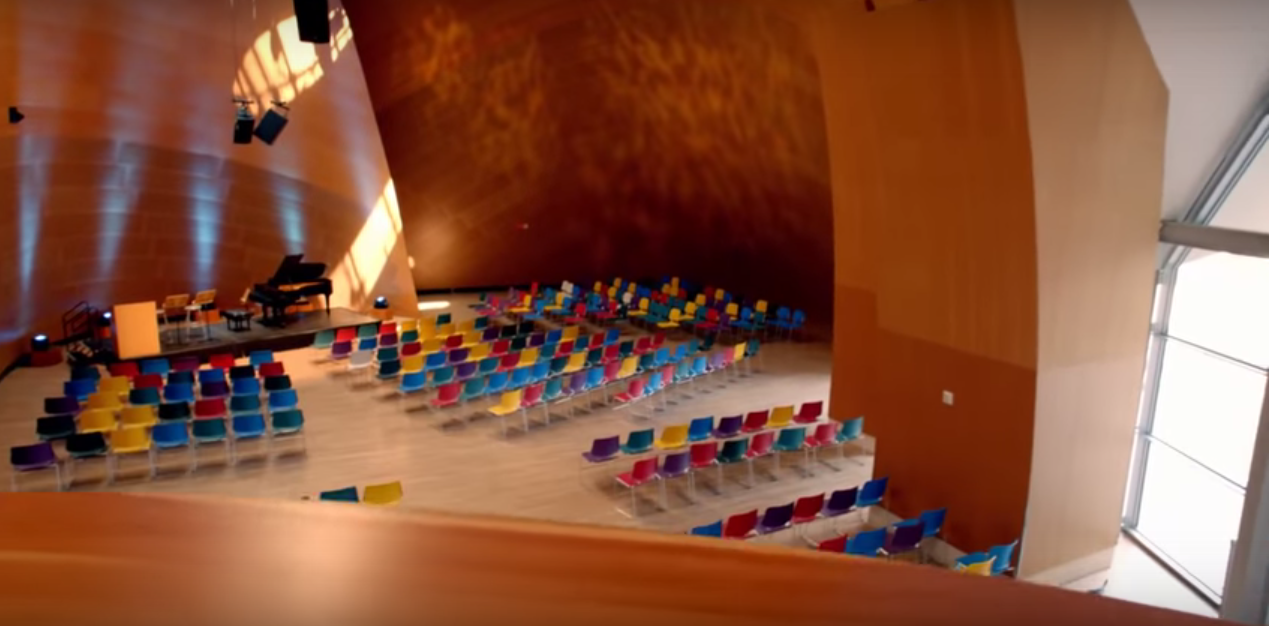





 In 2015, the Jubilee Centre for Character and Virtues at Birmingham University called for character education to be embedded in the UK curriculum. The report linked strong character traits such as resilience and perseverance to higher educational achievement, employability, and social, emotional, and physical health. Character matters. It is critical for personal happiness, maintaining relationships, and essential for an ordered society. Character strengths help people thrive and become the best version of themselves. But how is it taught, cultivated and nurtured? The family is the first place where moral cultivation begins. If adults wish to raise children of good character, they should start by showing them through their own actions.